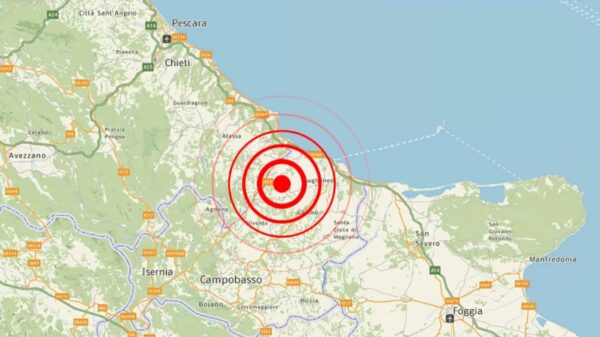

































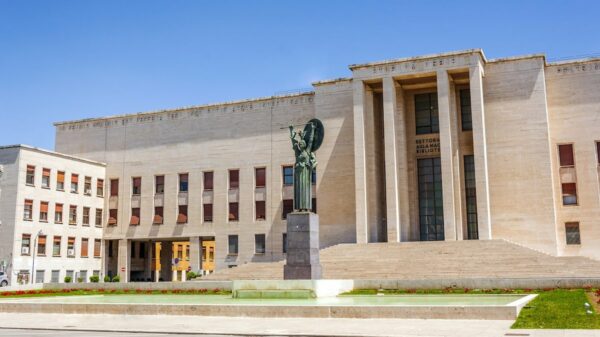



Last night, the southern Italian city of Naples was shaken by approximately 150 earthquakes, the strongest being 4,4 magnitude. This seismic event occurred in the Phlegrean Fields (Campi Flegrei, in Italian), a volcanic caldera near Naples, and left the population in panic. Authorities are inspecting buildings and infrastructure for possible damage.
Seismic activity
The phenomenon of bradyseism, characterized by the lifting and lowering of the soil, is common in volcanic areas such as the Phlegrean Fields. This process is caused by the increase or decrease in pressure in the surface strata of rock, which may be due to the intrusion of magma or the heating of the surface aquifers by the gas emanating from the deep magma.
The volcanologist Joseph DeNatale, from the National Institute of Geophysics and Volcanology (INGV), explains that the ground level in the Phlegrean Fields acts as a manometer, indicating the internal pressure of the volcanic system. The increase in this pressure can cause earthquakes, like those recently recorded.
Response to the seismic crisis
Italian Civil Protection has activated its Crisis Unit in Naples and the neighboring towns of Pozzuoli and Bacoli. Most of the tremors were felt at a depth of 2,6 kilometers, which increased their noticeable intensity. Around half a million people live in this highly populated area, and many spent the night on the streets, fearing further earthquakes.

The Supreme Court reaffirmed: citizenship is born with the person.
- New legal front opened
- Processes can still be filed.
- Individual assessment before any decision.
Security measures
Although there were no reports of injuries, cracks were found in some buildings, and pieces of construction material fell from damaged structures. Three buildings in Pozzuoli were evacuated, affecting 35 families who spent the night in tents set up by authorities.
Historical and comparative context
The current bradyseism crisis, which began in 2005, is a continuation of phenomena observed since the eruption of Monte Nuovo in 1538. Before and after this eruption, significant earthquakes occurred, with magnitudes interpreted as being close to 5. The difference between magnitude earthquakes 4 and 5 is substantial, with a magnitude 5 earthquake having 33 times the energy of a magnitude 4.
Observations and future predictions
De Natale points out that, despite the scare, there is no evidence of a recent increase in the speed of ground elevation, currently at 2 centimeters per month. In the period 1982-1984, the ground rose up to 9 centimeters per month, with more than 1.300 monthly earthquakes recorded.
The situation in Phlegraean Fields is constantly monitored, and the seismic crisis can last decades, being part of a prolonged phenomenon that began in the 1950s. Authorities continue to closely monitor volcanic and seismic activity in the region to ensure the safety of residents.