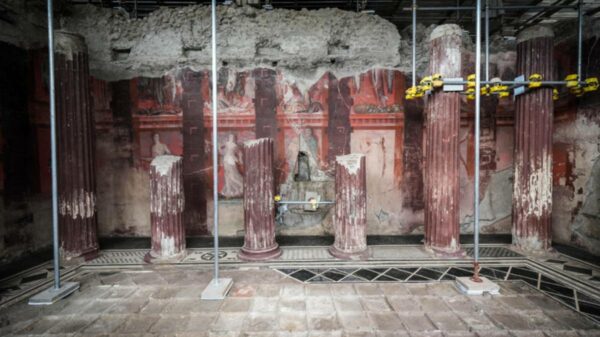



































Possible slave room discovered in ruins at the foot of Mount Vesuvius had two beds, only one with a mattress, and signs of rodents. “More revealing than a beautiful statue,” says museum director in Italy. The discovery of a small room near Pompeii sheds light on life as a slave in the Roman Empire.
The bedroom at Villa Civita Giuliana – a few hundred meters from the walls of the Italian city destroyed by the eruption of Mount Vesuvius, around 2 thousand years ago – had two beds, only one of which had a mattress, as well as two small cupboards and several ceramic containers and pots. Archaeologists believe it was an outbuilding for slaves.

The difference between the beds suggests that there was a hierarchy in the servants' wing. The Italian Ministry of Culture commented in a statement: “These details once again emphasize the precarious conditions and poor hygiene in which the lower echelons of society lived at the time.”
On social network (former Twitter), the director of the Pompeii Museum, Gabriel Zuchtriegel, stated that, in a way, the find is “more important and revealing of life in Antiquity than a beautiful statue”.
Invisible chains of bondage
As happened with most Pompeii, in the slaves' room, the ash of Vesuvius covered the furniture and fabrics, which fell apart over time, leaving detailed negative casts.
Archaeologists filled them with plaster, thus revealing the shapes and textures of the objects, including a sheet on one of the beds. The occupants shared the space with at least three rodents, one of which was found in a crate under a bed, apparently trying to escape the catastrophe that killed the city's human inhabitants.
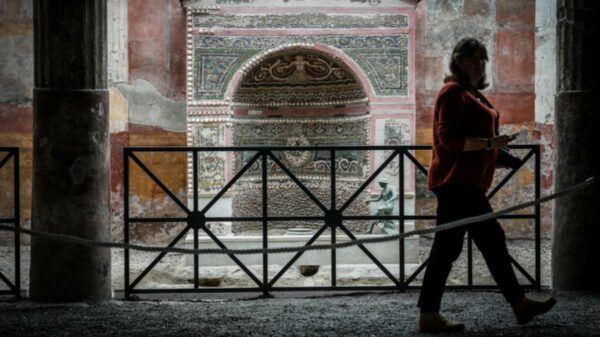
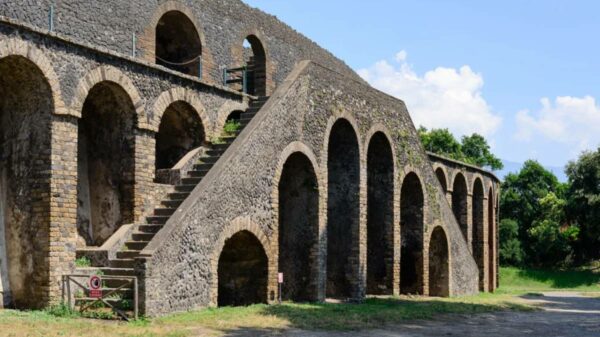
As there were no bars, locks or chains, Zuchtriegel deduces: “It appears that control was exercised primarily through the internal organization of servitude, rather than through physical barriers or impediments.” Buried in the year 79 and rediscovered in the 18th century, Pompeii is today one of Italy's main tourist attractions, having repeatedly revealed spectacular finds.
Its ruins were excavated in 1907-08, then again in 2017, when police realized the site was being looted by illegal diggers.
Since then, the location, around 25 kilometers from Naples, has been the scene of intense archaeological activities, also thanks to a recently concluded European Union fund of 105 million euros.