




























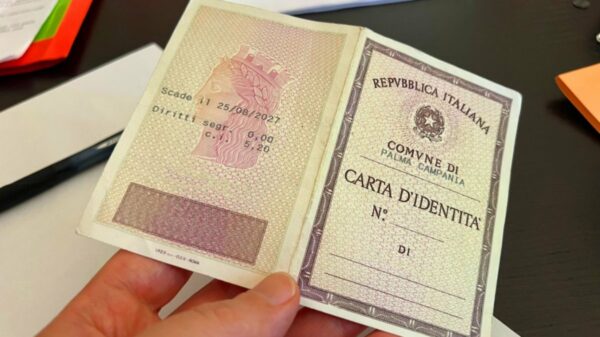







O Court of Florence recognized Italian citizenship jure sanguinis This applies to applicants who attempted to schedule consular appointments before the deadline set by the Tajani Decree, but encountered consular overload. The decision was issued on Monday, June 22, 2026.
The ruling adds to others that have already been protecting descendants in the same situation. In May, the The Court of Appeals of Reggio Calabria recognized the paralysis of consulates in South America as a well-known fact.Now, a court of first instance adopts the same understanding.

The appeal was filed in court on March 28, 2025, already under the new legislation. (Decree-Law 36/2025, converted into Law 74/2025)The rule, in effect since March 29, restricts the automatic recognition of citizenship for those born abroad who hold another nationality.
The law, however, protects those who submitted their application to the consulates or the relevant municipality by 23:59 pm on March 27, 2025. According to the judge, what matters is having acted on time: "the conduct that the rule seeks to reward is the initiative of the applicant, not the result of the bureaucratic process."
The consulate's inefficiency cannot define the right.
The judge understood that repeated attempts to schedule an appointment, frustrated by a lack of available slots, are equivalent to a formal request. He listed the situations that cannot prejudice the applicant: "scheduling system exhausted, lack of response to communications, suspension of services."
The ruling also cited the State's own defense in the Constitutional Court trial, which acknowledged the backlog of requests "especially in South America" as the cause of the long waiting lists. According to the court, making a fundamental right dependent on administrative inefficiency contradicts the logic of the law.
The Ministry of the Interior did not defend itself in the proceedings, and the court declared it in default. Ultimately, it declared the applicants Italian citizens, ordered their registration in the civil registry, and ordered the ministry to pay €1.452 in legal fees.
The lawyer who filed the lawsuit... Isabel De Lima He believes the outcome strengthens those who were left out due to the system's fault. "This ruling represents an important precedent in the post-Tajani Decree and post-Constitutional Court Ruling No. 63/2026 scenario, reinforcing the protection of descendants who were prevented from exercising their rights due to the overload and inefficiency of Italian consulates," he states.