































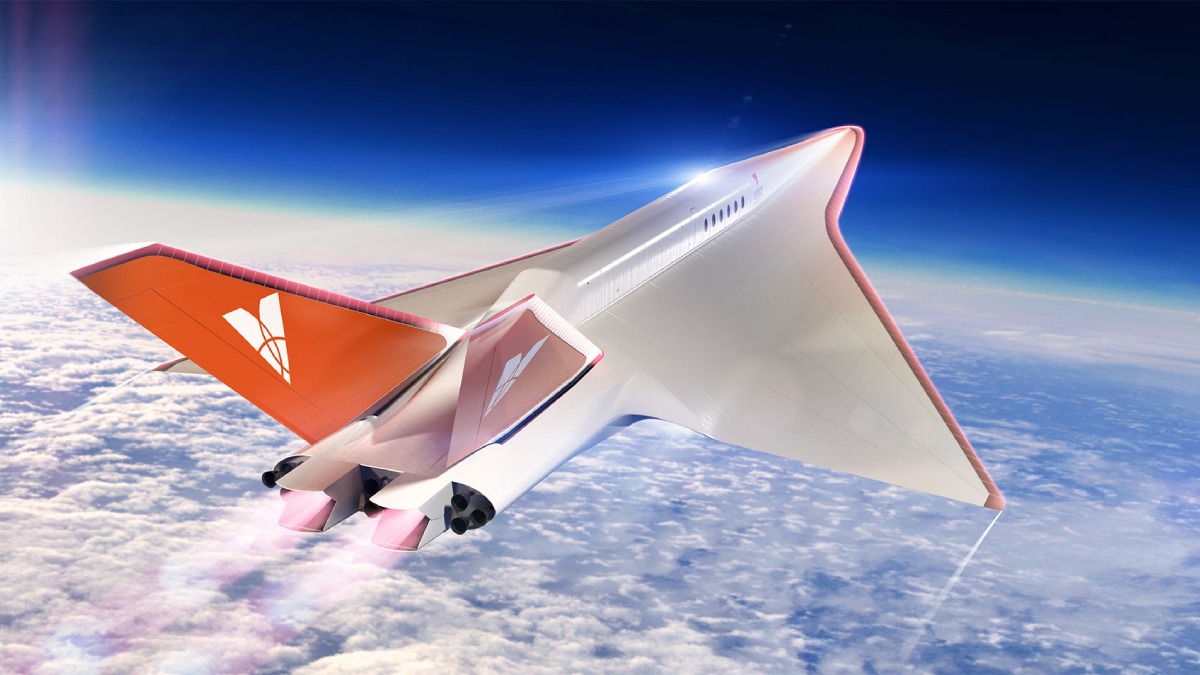
Traveling from Rome to New York in just 55 minutes may seem like a distant dream, but the Texas-based startup... Venus Aerospace is working to make it a reality. The company's project aims to develop a hypersonic engine that could revolutionize air transport, overcoming considerable technical challenges and redefining the experience of flying.
The promise of the hypersonic engine
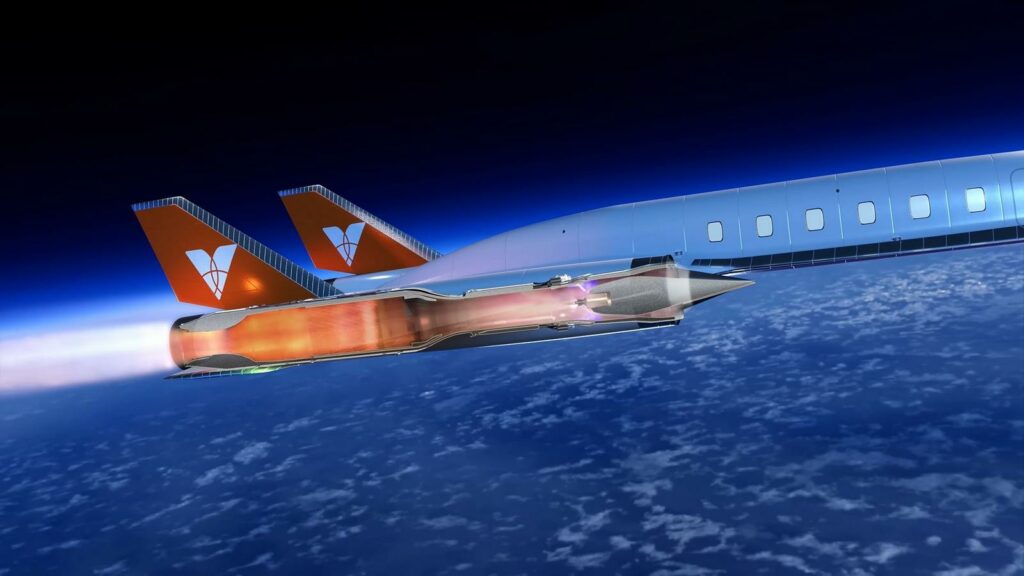
The VDR2 engine, developed by Venus Aerospace, is based on the concept of “rotary detonation”, which allows for significant acceleration, reaching up to Mach 6, that is, six times the speed of sound. According to the company's engineers, this technology will allow planes to fly at an altitude of more than 30 kilometers, much higher than the altitudes of current commercial flights, which will result in incredibly short travel times.
Andrew Duggleby, co-founder of Venus Aerospace, stated to Corriere della Sera “This engine makes the hypersonic economy a reality.” The first tests of the engine are scheduled for 2025, representing a major step towards the long-awaited transformation of air transport. However, there is still a long way to go before the technology is available for commercial flights.
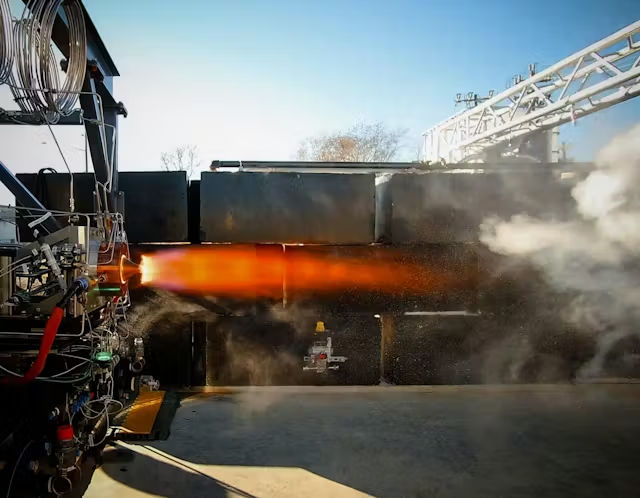
Eric Briggs, chief operating officer of Velontra, one of the companies involved in the development, adds: “We are looking forward to continuing to work on the project, flying the first prototype and finally perfecting an engine concept that until now has only existed in textbooks but never as a production unit.”

Law 74/2025 is being challenged in the Court of Justice of the European Union. For thousands of descendants, the next step depends on understanding how the new rule has affected each case.
Your case may still have a legal outcome.
ANALYZE MY CASEWith this new technology, trips that previously took hours, such as Rome to New York or from London to Beijing can be done in just over an hour, at speeds exceeding 7.400 km/h. During the flight, passengers will also have the opportunity to observe the curvature of the Earth, making the experience even more unique.
Challenges and uncertainties of the hypersonic future
Despite the excitement surrounding the VDR2 engine, many technical challenges need to be overcome before this technology can be applied to commercial passenger transport. Issues such as safety, energy efficiency, environmental impact and economic viability are some of the barriers that must be addressed.
The Concorde, an iconic supersonic airliner from the 1970s and 1980s, is an example of how revolutionary technology can encounter operational difficulties. High maintenance costs and safety issues eventually led to its permanent retirement. With the hypersonic engine, Venus Aerospace hopes to avoid these problems by focusing on a model that combines speed, sustainability and safety.
If the VDR2 engine is not viable for passenger transport, other applications, such as in the military sector or high-speed cargo transport, are not ruled out. The technology is still in the development and testing phase, but expectations for 2025 are high, fueling curiosity and hopes for a new era in air travel.