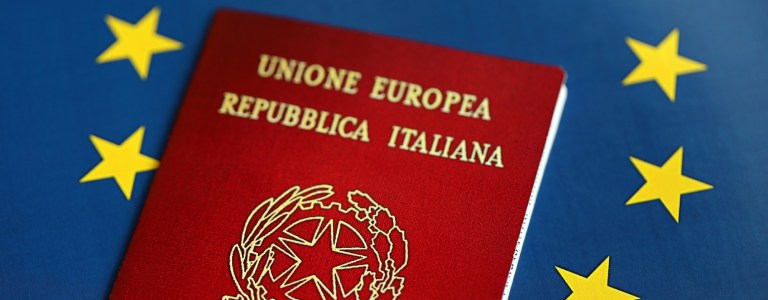

















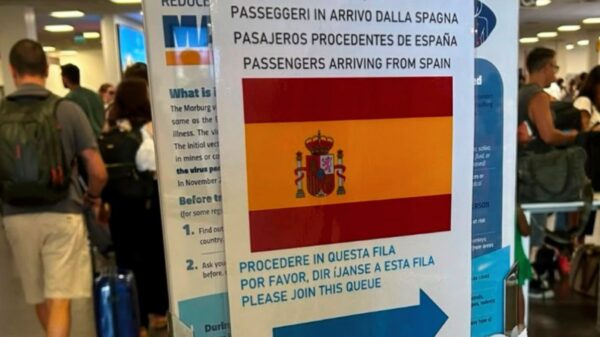





















You've spent years working, paying taxes, and contributing to Social Security (or INPS in Italy). Now, due to homesickness, the end of your contract, or new plans, you've decided to return to Brazil.
The question worth thousands of euros is: what happens to my money?
Contrary to what many believe, you don't have to "leave it to the government." There are two main ways to recoup the value of those years of effort.
Time transfer (bilateral agreements)
Brazil has social security agreements with Portugal, Italy, and Spain. This means that you don't immediately receive the money in "cash," but rather transfer your contribution time to the INSS (Brazilian National Social Security Institute).
The Supreme Court reaffirmed: citizenship is born with the person.
- New legal front opened
- Processes can still be filed.
- Individual assessment before any decision.
- How it works: If you worked 5 years in Italy and 10 years in Brazil, you can combine those periods to retire earlier in Brazil. (or with a higher value).
- Advantage in 2026: via portal SouGov And thanks to integrated European systems, this time registration is now done digitally, eliminating the need for stacks of stamped papers.
“International social security agreements allow workers to combine periods of contribution made in each signatory country for the purpose of granting benefits, such as retirement due to age or disability, and survivor's pension. Furthermore, they avoid double taxation of social security contributions in cases of temporary relocation,” says the website of the Brazilian Ministry of Social Security.
Tax refunds (specific cases)
Although the general rule is the sum of the time, some specific "short-term" visas or international cooperation agreements allow for the reimbursement of certain social security contributions that do not apply to those who do not intend to retire in the country.
Important: Full redemption of the value (withdraw the money and deposit it into the account) It is only permitted in countries with which Brazil has an agreement. not It has an agreement, which is not the case in Portugal, Italy, or Spain. In those countries, the benefit is enjoyed in the form of a proportional pension.
The danger of "forgetting" about money.
If you leave Europe and do not apply for the Connection Form (such as the old PB-4 for health or certificates of contributory periods)The European government will continue to hold onto your money. Upon arriving in Brazil, you will face enormous difficulties proving that you worked legally.
Essential documents to request before traveling in 2026:
Spain: Report on your work life..
Portugal: Declaration of contribution status.
Italy: Extract of a Social Security Account (INPS).
Countries with a social security agreement in force with Brazil.
Brazil has two types of agreements: Multilateral (involving several countries at once) and the Bilateral (direct transfer between Brazil and another country).
| Country | Type of Agreement |
|---|---|
| Germany | Bilateral |
| Argentina | Bilateral and Multilateral (MERCOSUR and Ibero-American) |
| Belgium | Bilateral |
| Bolívia | Multilateral (Ibero-American) |
| Bulgaria | Bilateral |
| to Canada | Bilateral |
| Chile | Bilateral and Multilateral (Ibero-American) |
| Colombia | Bilateral and Multilateral (Ibero-American) |
| South Korea | Bilateral |
| El Salvador | Multilateral (Ibero-American) |
| Equador | Multilateral (Ibero-American) |
| Spain | Bilateral and Multilateral (Ibero-American) |
| United States | Bilateral |
| France | Bilateral |
| Greece | Bilateral |
| India | Bilateral |
| Italy | Bilateral |
| Japan | Bilateral |
| Luxembourg | Bilateral |
| Mozambique | Bilateral |
| Paraguay | Multilateral (MERCOSUR) |
| Peru | Multilateral (Ibero-American) |
| Portugal | Bilateral and Multilateral (Ibero-American) |
| Quebec (Canada, sub-agreement) | Bilateral and regional treaty |
| República REPUBLIC | Bilateral |
| Switzerland | Bilateral |
| Uruguay | Multilateral (MERCOSUR) |