
































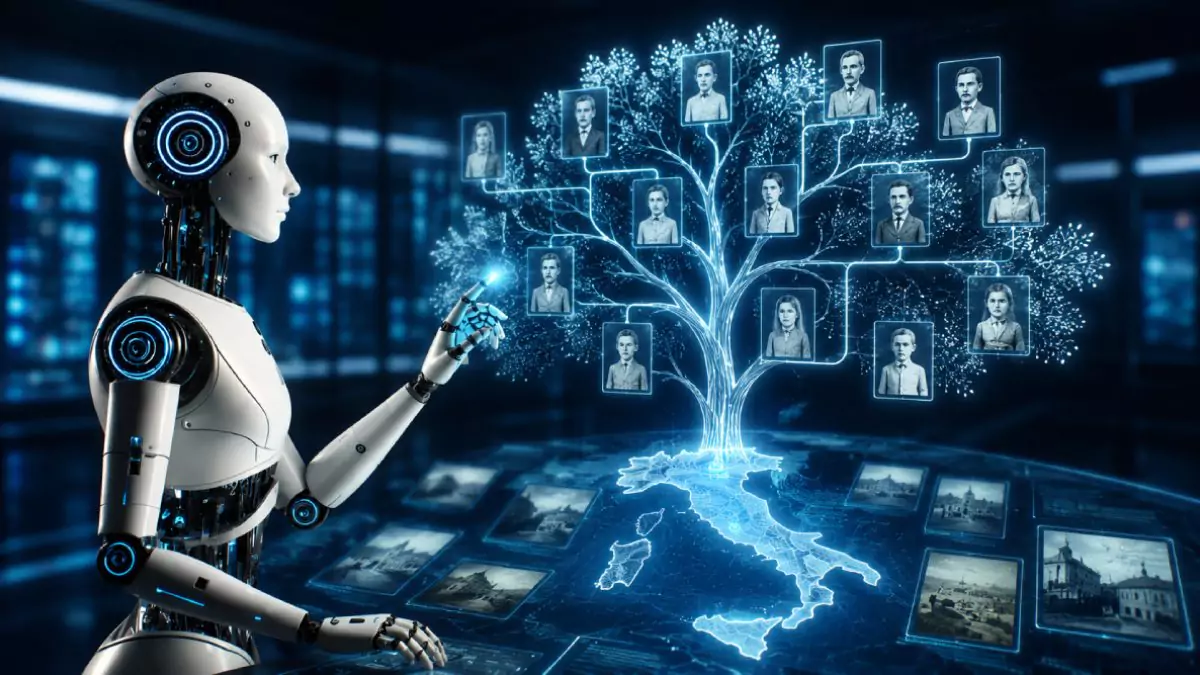
Searching for an Italian ancestor has always been a work of patience: leafing through, image by image, handwritten records spanning two hundred years. But artificial intelligence is changing that. Tools that read manuscripts are already transforming entire documents into searchable text, and this technology is beginning to cover Italian records.
This new technology is of direct interest to descendants in Brazil. With AI, it's possible to find a birth, marriage, or death certificate by searching for a name, place, or even a witness, without reading page by page. But the same technology requires caution. because it also makes mistakes.
AI that reads ancient manuscripts
The main turning point comes from FamilySearch Full-Text SearchThe genealogical database, the world's largest free genealogical repository, was launched in 2024 and uses handwriting recognition to transcribe entire documents, not just the names and dates an indexer would note. The genealogical community has dubbed it a game-changer.
Until now, it operated with records in English, Spanish, and Portuguese. Throughout 2026, the FamilySearch It is including new languages, among them. the ItalianIn practice, collections that were "locked" by the barrier of handwriting and language become searchable with just a few words.

The Supreme Court reaffirmed: citizenship is born with the person.
- New legal front opened
- Processes can still be filed.
- Individual assessment before any decision.
Where are the Italian records?
The official collection is located in Antenna PortalsThis is a website from the Italian Ministry of Culture, which freely compiles images of civil status documents. The documents begin in the early 19th century, and some archives date back to the 1,8th century. In 2025 alone, more than 7 million new images were added, and the portal reached over 1.8 million users.
The portal was also designed for descendants abroad, who can, in the Ministry's words, "access official sources without having to physically go to the archives." The digitization is done in partnership with the institution itself. FamilySearch 2011 since.
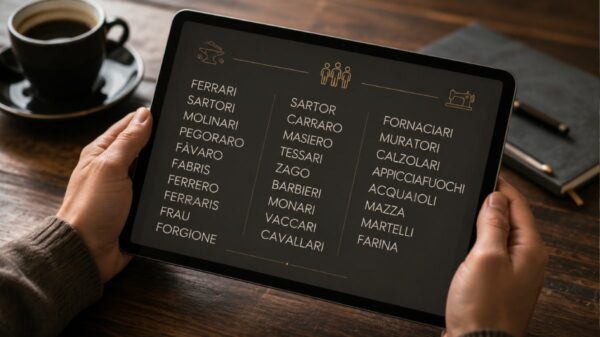
There's one detail that connects everything. To find a record, you need to know the year and, above all, the municipality of origin. This is where surname research helps, because it indicates in which municipalities the name is most common and narrows down the search.
The precaution that no one can skip.
AI speeds things up, but it doesn't replace the process of transcribing. Automatic transcription isn't perfect, so ideally you should always open the original image and correct what the machine read. It's also worth using variations in spelling in the search and looking for distant relatives, such as godparents and neighbors.
The greater risk lies elsewhere. Generative AI chatbots, when used for genealogy, They can invent names....dates and even sources that never existed. No AI result is valid as proof without the original document alongside it. Technology opens doors; it's still up to you to verify the story.