


































December 27 marked the symbolic debut of the vaccine against Covid-19 in Italy: check the numbers of the expected (not for everyone) vaccine.
Italy has a ambitious goal: end the vaccination campaign by summer. The idea is to achieve collective immunity covering most of the country, before schools reopen in September.
But along the way there are still several question marks: the arrival date of the other vaccines and the distribution of doses, the duration of vaccination and the number of people who will agree to be vaccinated.
Italy received 9.750 doses of the vaccine, Germany 150
The doses delivered to European Union countries have generated controversy.
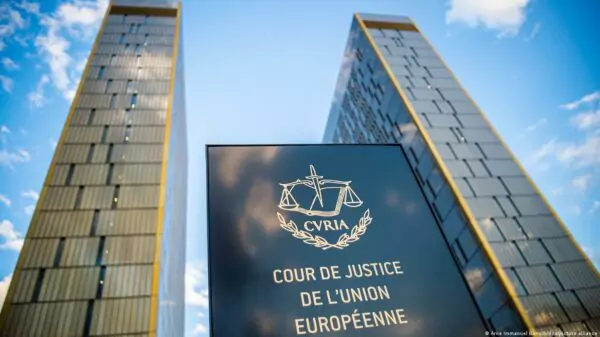
Law 74/2025 is being challenged in the Court of Justice of the European Union. For thousands of descendants, the next step depends on understanding how the new rule has affected each case.
Your case may still have a legal outcome.
ANALYZE MY CASEItaly, one of the most affected countries in the world with deaths proportional to population, received 9.750 doses.
Meanwhile, the German Health Minister, Jens Spahn, spoke of other, much more substantial numbers: a first shipment of 151.125 doses arrived on December 26th. Another three shipments, totaling 1,9 million doses, should arrive on December 28th and 30th and during the first week of January.
Doses must be proportional to the population: Italy has around 60 million inhabitants and Germany more than 83 million, but this should apply on a general level, i.e. in the total of 300 million doses ordered by the EU from Biontech-Pfizer: not in the first doses.
The Ministry of Health tried to calm tempers and stated that, after these first doses of the symbolic debut, the country should receive 470 thousand doses per week.
Italy will be entitled to more than 202 million doses
Based on preliminary purchase agreements, in 2021 Italy will be entitled to more than 202 million doses.
An amount that will cover the entire population and have a reserve stock. But there are several catches.
At the moment, the only vaccine authorized by European and Italian regulatory bodies, Ema and AIFA, is precisely that of Pfizer with which Italy began vaccination this Sunday.
And which, however, is the most complicated to distribute, as it must be stored at a temperature of 70 degrees below zero.
There is still no landing date for the other vaccines. The first must be Moderna, which does not require an ultra-cold distribution network.
For this reason, the supply situation remains variable.
28 million doses in the first quarter of 2021
It is estimated that Italy should have 28 million doses in the first quarter of 2021, between January and March.
Then, it should double to 57 million doses, between April and June, and then stabilize at 53 million between July and September.
The decline would then begin, still remaining at important volumes: up to 20 million doses in the second quarter of 2022.
Vaccine numbers against covid-19 in the European Union
The Reuters news agency, on December 24, published forecasts of vaccine numbers against Covid-19 in several European countries. Check it out:
Italy
The first doses to arrive were 9.750. The next doses will be 470 thousand every week.
Law 74/2025 is being challenged in the Court of Justice of the European Union. For thousands of descendants, the next step depends on understanding how the new rule has affected each case.
Your case may still have a legal outcome.
ANALYZE MY CASEGermany
The initial doses were more than 150 thousand.
France
On December 26th, 19.500 doses arrived for 67 million inhabitants.
Spain
The country will receive 350 doses per week. The first arrived on December 26th.
Portugal
By the end of the year, 80 doses of the vaccine will be delivered.
Romania, Czech Republic, Slovakia and Bulgaria
The first doses – around 10.000 – arrived on December 26th.
Hungary
Prime Minister Viktor Orban spoke of a first batch of vaccine doses “enough to vaccinate 35 people”.
Denmark
In the first country where the English variant of the virus was found outside the United Kingdom, the first shipment is 40.000 doses.
Norway and Sweden
The first load is around 10 thousand doses.
Serbia
Prime Minister Ana Brnabic spoke of a first batch of 4.875 doses.
Malta
The island received an initial shipment of 26 doses of the vaccine on December 10.000th. Health Minister Fearne said he hopes to have three-quarters of the population vaccinated by early summer 2021.
Switzerland
Switzerland – which is not part of the European Union – started its vaccination campaign with 107 thousand doses.
With information Reuters, Courier e Republic