





































A descendant of Italians who had been waiting for more than two years for an appointment at the consulate has obtained recognition of his citizenship through the Italian courts. Palermo Court, at southern Italy, applied the regime prior to the Tajani Decree, even though the request was filed in 2026, after the cut-off date of March 27, 2025.
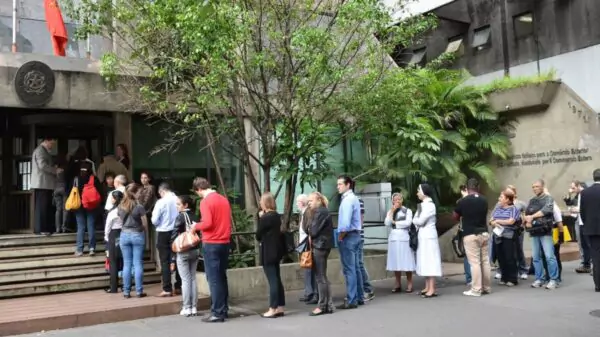
The decision speaks directly to a large group. It is estimated that more than 240.000 people were waiting in line at the three main Italian consulates in Brazil when the Tajani reform was announced, many of them having waited for years.
The case was judged on June 23, 2026, about four months after it was filed. short timeframe for this type of actionThe applicant waited in line for more than two years without receiving an appointment date. According to the judge, this wait created an expectation comparable to that of someone who already had an appointment scheduled or a case in progress by March 27, 2025. In the ruling, the magistrate wrote that the applicant's expectation "has been sufficiently consolidated and is comparable to that of someone who already had an appointment scheduled for March 27, 2025."
To apply the previous law, the judge relied on the preamble of the Tajani Decree itself, which preserves the old rule for controversies initiated before the Council of Ministers' deliberation on the decree. He also cited Constitutional Court decision no. 63/2026, which confirmed the reform, and used the Court's logic regarding already consolidated positions in favor of the applicant. The proceedings were conducted by a single judge, with the Ministry of the Interior absent and the Public Prosecutor's Office participating.

The Supreme Court reaffirmed: citizenship is born with the person.
- New legal front opened
- Processes can still be filed.
- Individual assessment before any decision.
More than 240.000 in line.
According to a survey obtained by Italianismo, based on waiting lists and archived summons from the consulates, São Paulo had approximately 135.000 adult applicants on the waiting list, not counting minor children. In Curitiba, the estimate is around 25.000 people. In Porto Alegre, where the service queue was family members, the number could reach 80.000.
Taking the three consulates together, the survey indicates that approximately 240,000 people have been affected. These numbers are estimates, not official figures.
The Palermo ruling applies to this specific case. It is a first-instance decision, does not constitute binding jurisprudence, and is still subject to appeal. It does not guarantee the same outcome for those on the waiting list, but it shows a line of argument for those who were left without an appointment before the cut.
The line of descent
On the merits, the transmission occurred through the paternal line. The great-grandfather, an Italian born in Italy, only became a naturalized American citizen when the applicant's grandmother, born before the naturalization, was already of legal age. Therefore, the great-grandfather's departure did not interrupt the transmission of citizenship. In the end, the judge granted the request made by the lawyer. Carlo Pontei and declared the applicant to be an "Italian citizen".
According to constitutional lawyers interviewed by Italianism In recent days, decisions of this nature have become more frequent, and thousands of cases await a ruling. Sezioni Unite da Corte de CassaçãoAccording to these lawyers, the legitimate claim of those who were already waiting in line before the reform should prevail.
READ THE SENTENCE
(Based on information from the Palermo Court ruling and data obtained by Italianismo)
















Cecilia Benassi
June 26 from 2026 at 02: 55
What to do in the case of an Italian-descendant citizen who only managed to register with AIRE after the shameful decree, because she stated that she had a Brazilian child born after the recognition, and the consulate requested a transcribed copy of his birth certificate?
She was going to register it when she did the AIRE registration, then she tried just the AIRE registration and then register it later, but they insisted on asking for the transcribed certificate.
She only succeeded when the child lost that right by decree.
Thank you