































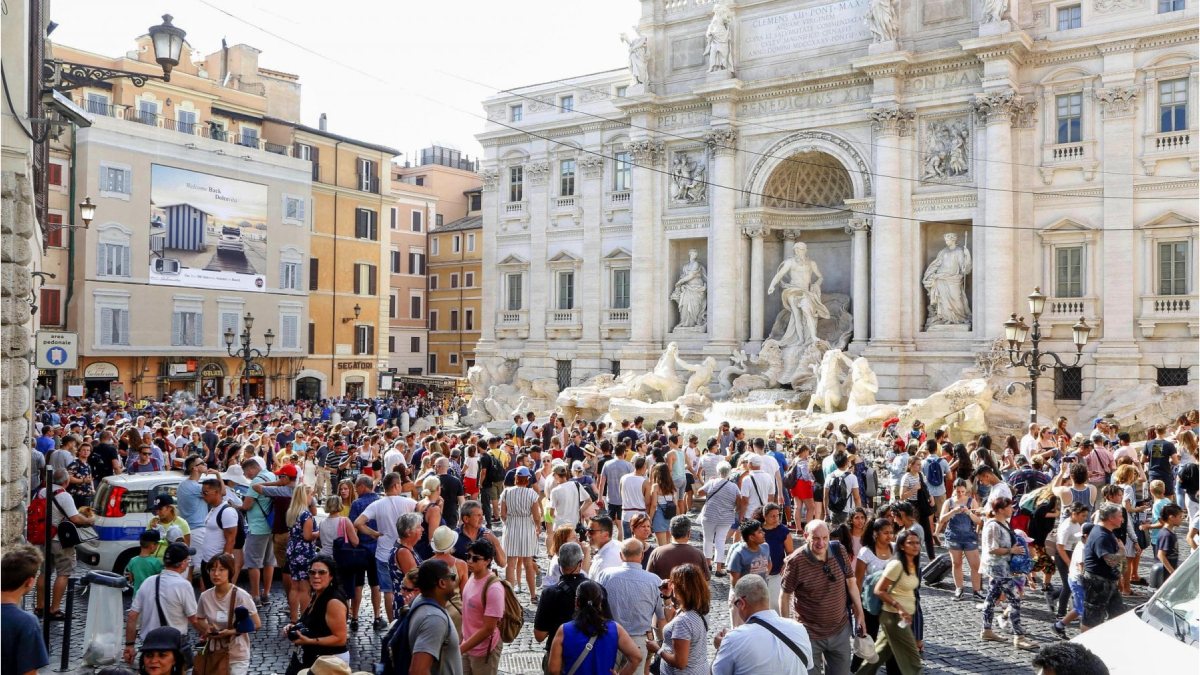
The city of Rome may start charging a €2 entrance fee for tourists visiting the Trevi Fountain Starting January 7th. The measure has not yet been officially confirmed, but it has been detailed by local authorities and widely reported in the Italian press.
The proposal was discussed by Rome's Tourism advisor, Alessandro Onorato, during an interview with Rai Radio1. According to him, the idea envisions separate entrances for Rome residents, who would have free access, and tourists, who would pay with a credit card.

“If the Trevi Fountain were in the United States or elsewhere in Europe, they would make you pay 50 euros,” Onorato stated, adding that €2 would be “the minimum” to be asked for access to one of the most visited monuments in the world.
Despite the statement, sources from the city hall informed the Ansa news agency that the plan is still "a working hypothesis." The final decision should be made after a meeting scheduled between Thursday and Friday, followed by a press conference before Christmas.
The goal is to control the flow of visitors.
The proposal aims to deal with the high number of visitors and generate revenue for the monument's maintenance. According to estimates from the city hall, the fee could generate up to €20 million per year.
In the first half of 2025 alone, the Trevi Fountain received 5,3 million visitors, surpassing the annual total of the Pantheon. Frequent cases of tourists swimming in the fountain, damaging the monument and violating rules of conduct have prompted authorities to take action.
Since December 2024, access to the fountain has been limited to 400 people at a time, following a three-month restoration project. At the time, A temporary walkway allowed up to 130 people to visit simultaneously., while technical teams carried out the cleaning of the structure.
The system could follow the Pantheon model.
The new payment system may include a scheduling platform, but there are technical challenges because it is an open-air monument located in a high-traffic area in the historic center of Rome.
The measure follows the model adopted at the Pantheon, which began charging non-residents for entry in July 2023. The experience is considered successful because it has improved access control and increased resources for preservation.
Organizations such as the consumer association Codacons have criticized the potential fee, although they support the current access restrictions as a way to protect property.
The city government is still working on the final details of the entry system, and there is no official confirmation of the exact start date.