




































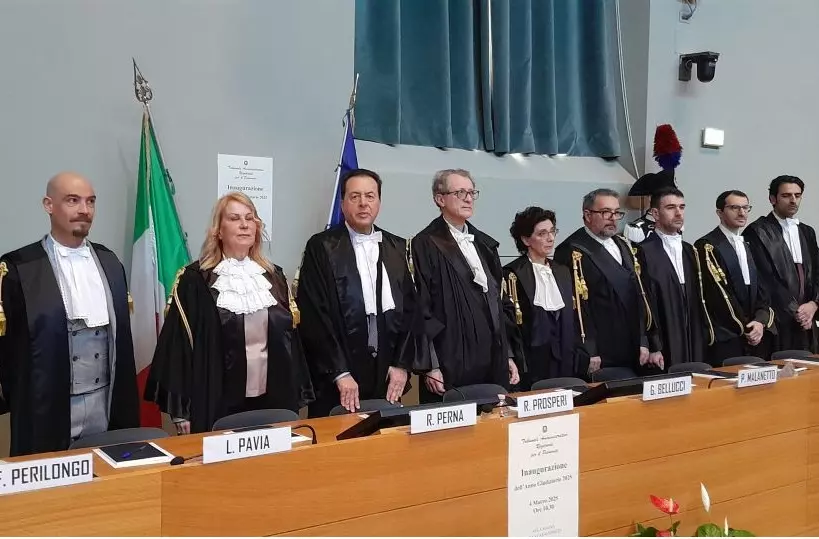
Can a great-great-grandfather born in 1830 be considered Italian for citizenship purposes? The answer from the president of the Regional Administrative Court (TAR) of Piedmont, Raffaele Prosperi, was negative.
During the opening of the judicial year, this Tuesday (March 4, 2025), Prosperi raised doubts about the historical validity of this link, questioning the interpretation of Italian citizenship by descent, according to the newspaper. La Voce Newspaper.

The case involves a Italian-Brazilian who resorted to the courts to obtain Italian citizenship based on a great-great-grandfather who emigrated to Brazil in 1830, before the unification of Italy.
The court ordered the municipality of Roure, a small Alpine village, recognized citizenship. However, Prosperi criticized this decision: “In 1830, Italy was still, as we learned in school, a 'geographical expression'. Can we really define that great-great-grandfather as Italian?” he asked.
The controversy over citizenship by blood
Italian law allows descendants of Italians to obtain citizenship based on blood right (jure sanguinis). However, Prosperi's argument touches on a delicate point: the lack of a unified Italian state in 1830.
At that time, the peninsula was fragmented into several kingdoms and duchies, without a central government that represented a national identity. For Prosperi, this absence of an Italian state calls into question the legitimacy of the historical bond used as the basis for citizenship applications.
The judge's speech sounds like a threat to historical rights. Current legislation recognizes citizenship based on family continuity, regardless of the political situation at the time. Changing this understanding would mean closing the doors to thousands of descendants who are waiting for recognition of their citizenship.
A dangerous precedent?
Another point raised by Prosperi was the impact of this decision on the judicial system. According to him, there is a “siege” on Italian consulates, especially in South America, with thousands of similar requests.
“There is talk of a siege on our diplomatic and consular representations by descendants of Italian emigrants. If this trend were to become more widespread, we could be faced with thousands of lawsuits, with a devastating impact on the civil courts,” warned the judge.
Prosperi also mentioned the possibility of “criminal offenses yet to be assessed,” due to the overload of civil courts.
In addition to the legal aspects, Prosperi highlighted a potential political effect: the new citizens would be registered on the electoral lists as residents abroad, which could influence the Italian elections.