

































By Daniel Taddone
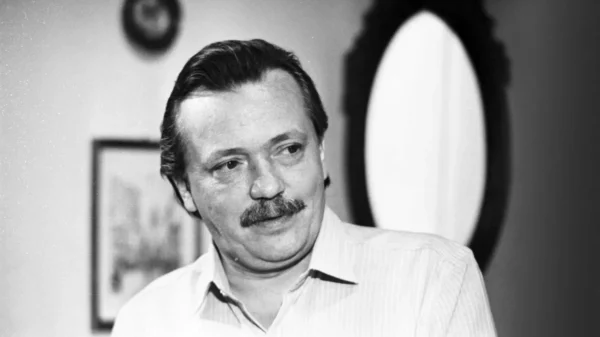
This past Sunday (13/10/2024) marked the passing of a great name in Brazilian advertising. Perhaps its greatest name of all time. The São Paulo native washington olivetto died in Rio de Janeiro at the age of 73.

His achievements in advertising are known to every Brazilian over the age of thirty. Special mention goes to the “Bomril boy” and “my first bra”. His biography also includes his long kidnapping in 2001, when he spent almost three months in captivity.
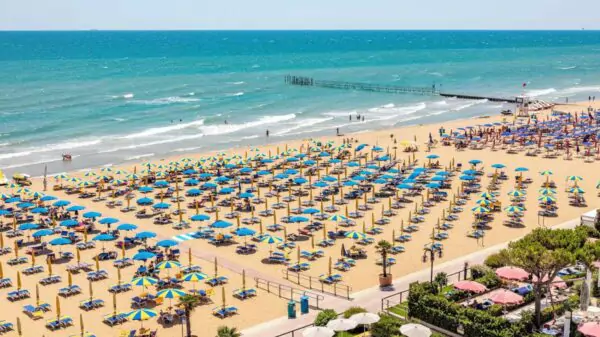
But let's talk about Italian origins, and not only, of Olivetto. In all the interviews in which he spoke about his origins, the publicist related two facts about his genealogy: a poor “great-great-grandfather” born in the charming seaside town of Portofino in Liguria and maternal grandmother Lucia who, in his words, was a “billionaire princess”.
These two “facts” that Olivetto related, as we can suspect, were entirely fanciful. I do not know whether they were of his own creation or whether they were those “old wives’ tales” that grandparents love to tell.
Both of Olivetto's parents were born in the Santa Ifigênia neighborhood, in downtown São Paulo. His grandfather Olivetto was born in Piracicaba, the son of two Venetians from province of Padua who have already emigrated married to Brazil.
His great-grandfather, Paolo Olivetto, and his great-great-grandfather, Marco Olivetto, the so-called “poor great-great-grandfather of Portofino”, never set foot in the Ligurian town. They were simple Venetian peasants like the hundreds of thousands who emigrated to Brazil. His paternal grandmother, Judite Loureiro, was possibly of Portuguese descent.
On his mother's side, Olivetto was entirely descended from the Lucanians of the town of Tolve. His mother, Antonia, was the daughter of Gerardo Santorsa and Lucia Tamburrino, who arrived in Brazil in 1927 with their firstborn Nicola. It was precisely this grandmother Lucia who was the "billionaire princess" of Olivetto's stories.
In fact, Lucia’s grandmother belonged to a higher social class than her grandfather. Lucia’s father, Alessandro Tamburrino, was a “civile,” that is, a resident of the urban area of Tolve. He was not a peasant. He probably owned the house where he lived. However, Lucia was not a princess of any kind and was far from being a billionaire. And, of course, she was not “kidnapped” by Gerardo to get married on the run.
Olivetto’s fantastic accounts of his genealogy are delightful, but they are also an important reminder that in the serious study of genealogy we should never confine ourselves to oral accounts of family members or research subjects. People’s minds are often very fertile when it comes to inventing a past that never existed. And no royal genealogy can resist the charm of a “great-great-grandfather from Portofino” or a princess and billionaire grandmother.
* Daniel Taddone He is a sociologist, graduated from the University of São Paulo, a genealogist and a Councilor at the CGIE ((Consiglio Generale degli Italiani all'Estero).
Originally published in Insieme Magazine.