























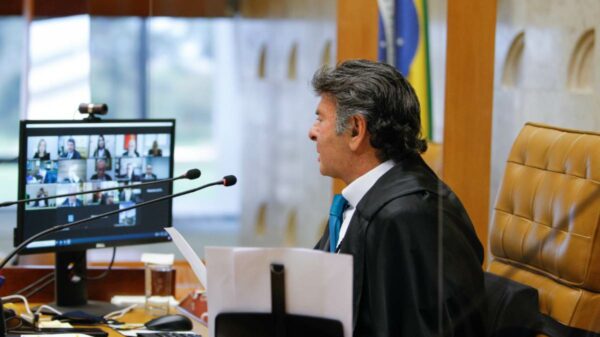















By 10 votes to 0, the Supreme Federal Court (STF) concluded this Tuesday (18) the judgment on the motions for clarification in ADI 7196 and maintained the main rules for public translators and interpreters established by Law 14.195/2021.
The decision preserves the registrations of professionals who had already been qualified through proficiency exams at the excellence level, known in the sector as the "C2 route," but establishes that new registrations through this mechanism will depend on additional regulation.
According to the ruling, enrollments approved until March 8, 2026, were protected. Industry estimates indicate that just over 270 professionals were enrolled through this modality in more than half of the states.
For future qualifications without the National Aptitude Exam, the STF It was determined that the regulations should provide, in addition to proof of proficiency, mechanisms for state participation or control, and a way to specifically assess competence in translation.

The Supreme Court reaffirmed: citizenship is born with the person.
- New legal front opened
- Processes can still be filed.
- Individual assessment before any decision.
In practice, therefore, the C2 certificate alone will not be sufficient for new enrollments.
Supreme Court upholds the pillars of the 2021 law.
The other points contested by National Federation of Public Translators and Interpreters (Fenatip) were deemed constitutional.
These include the possibility for foreigners residing in Brazil to practice the profession, the involvement of public officials in certain situations, and the freedom to set prices for services.
Law 14.195/2021 establishes that Brazilians or foreigners residing in the country may practice the profession and requires higher education, legal capacity, passing an aptitude test or qualifying for the exceptional exemption, and registration with the Commercial Registry.
The legislation also allows public officials to perform translations and interpretations related to the duties of their positions under certain circumstances.
With the decision on the appeals, the Supreme Court's ruling concludes a dispute that began in 2022 regarding the constitutionality of the new regulatory framework for the profession. The Direct Action of Unconstitutionality (ADI) had been filed by Fenatip against provisions of Provisional Measure 1.040/2021 and the law that subsequently converted it.
What changes for the C2?
The most controversial point has always been the sole paragraph of article 22 of Law 14.195, which allows for waiving the aptitude test for those who obtain a "degree of excellence" in national or international proficiency exams.
In February, the Supreme Federal Court (STF) had already unanimously decided that the possibility was constitutional, but suspended new qualifications based solely on proficiency certificates until adequate regulations were created.
The Court understood that the public trust attributed to translations requires mechanisms that allow the State to effectively verify professional qualifications, and not just general proficiency in a foreign language.
The injunctions now define the effects of the decision more clearly, especially in relation to professionals who had already obtained enrollment under the previous rules.
This means that anyone who has already obtained their registration within the protected period retains their status as a public translator and interpreter.
For new candidates, however, it will be necessary to wait for the regulations that will define how the alternative to the National Aptitude Examination will work.
National Exam continues
While regulation of the alternative route remains pending, the first National Aptitude Examination for Public Translators and Interpreters continues to be underway.

The Constitutional Court's decision changed the landscape. The new citizenship law will now be reviewed by the European Union's courts of justice.
Organized by the National Department of Business Registration and Integration (DREI) and administered by Cebraspe, the exam includes a written essay test and an oral test for foreign languages.
The competition experienced technical problems during the exam administration and underwent an internal audit. The Ministry of Entrepreneurship summoned some of the participants for a substitute exam, held in August.
Those who pass the selection process may apply for registration with the Commercial Boards, provided they also meet the other legal requirements, such as higher education and, in the case of foreigners, legal residence in Brazil.
The conclusion of ADI 7196 consolidates most of the reform promoted in 2021 and maintains two possible pathways for the entry of new professionals: the National Aptitude Examination and, in the future, a new modality of exemption from the examination, provided that it is subject to the additional criteria required by the STF (Supreme Federal Court).