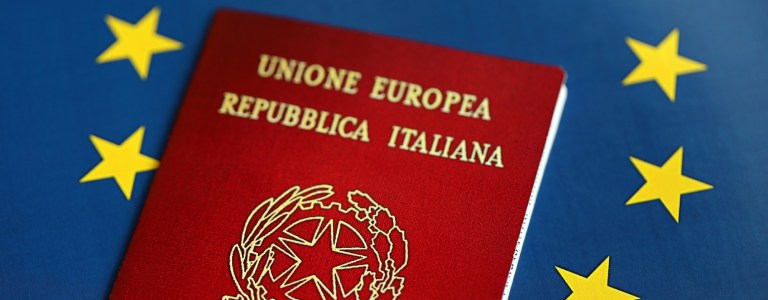

























Luxembourg, a small European treasure where prosperity intertwines with cultural diversity, has emerged as a destination of choice for individuals who hold the Italian citizenship and are fluent in Portuguese.
In this corner of the continent, two communities — the Italian and the Portuguese — found a welcoming home, offering unique opportunities for those who decide to settle in their lands.

In the panorama of the various initiatives aimed at Portuguese emigration, the current project “Moving Lusitalia".
Located in the neighborhood Italy, in the city of Dudelange, Luxembourg, has as its central mission to highlight the rich history of Italian and Portuguese emigration, while examining the new migratory flows that continue to shape the region.
The project "Moving Lusitalia” was conceived within the scope of the European Capital of Culture Esch-sur-Alzette 2022 and is coordinated by two notable figures: Heidi Martins, a respected Portuguese researcher at the Human Migration Documentation Center (CDMH), and Chiara Ligi, a talented Italian artist and producer specializing in intangible cultural heritage and social issues.
In recent years, these dedicated social scientists have dedicated their efforts to reliving the life stories of Italian and Portuguese emigrants linked to steel and mining in Luxembourg.
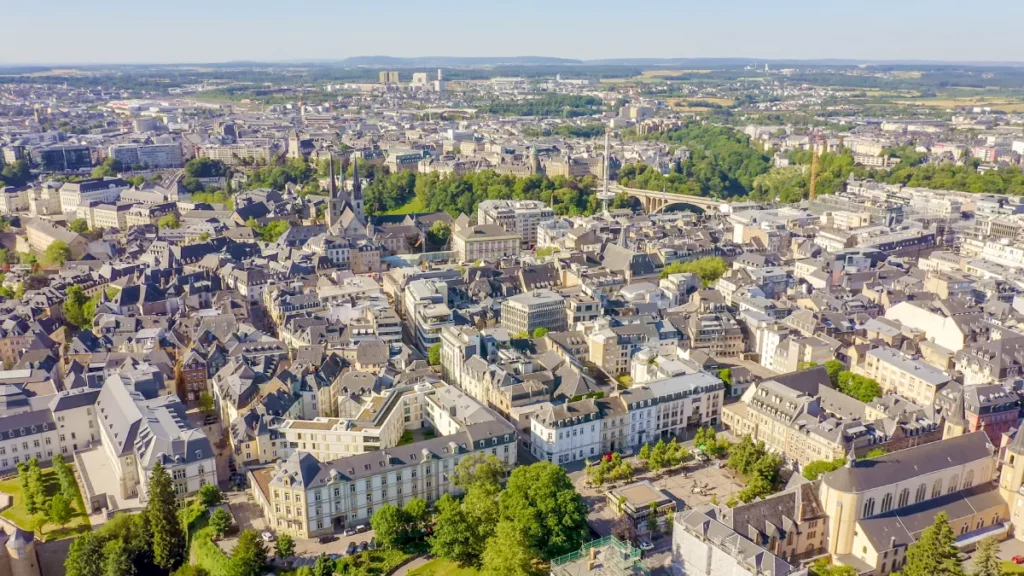
Currently, the Portuguese represent around 14% of the total population of Luxembourg, being the largest community in the Grand Duchy — on January 1, 2023 the population reached the mark of 660.809 inhabitants.
This migratory flow began in the late 1950s, marking the beginning of the massive phenomenon of Portuguese emigration to the industrialized countries of Western Europe.
During the 1960s and 1970s, Luxembourg witnessed the arrival of thousands of Portuguese, with men who excelled in construction and women who dedicated themselves mainly to cleaning, mainly in the city of Luxembourg and in the south of the country. However, the Portuguese established themselves throughout Luxembourg, contributing significantly to the enrichment of local culture.
Today, more than ever, Luxembourg continues to attract a young, predominantly male foreign population. Overall, foreigners are notably younger than the Luxembourg population, with an average age of 39 years, compared to 40,4 years for women.
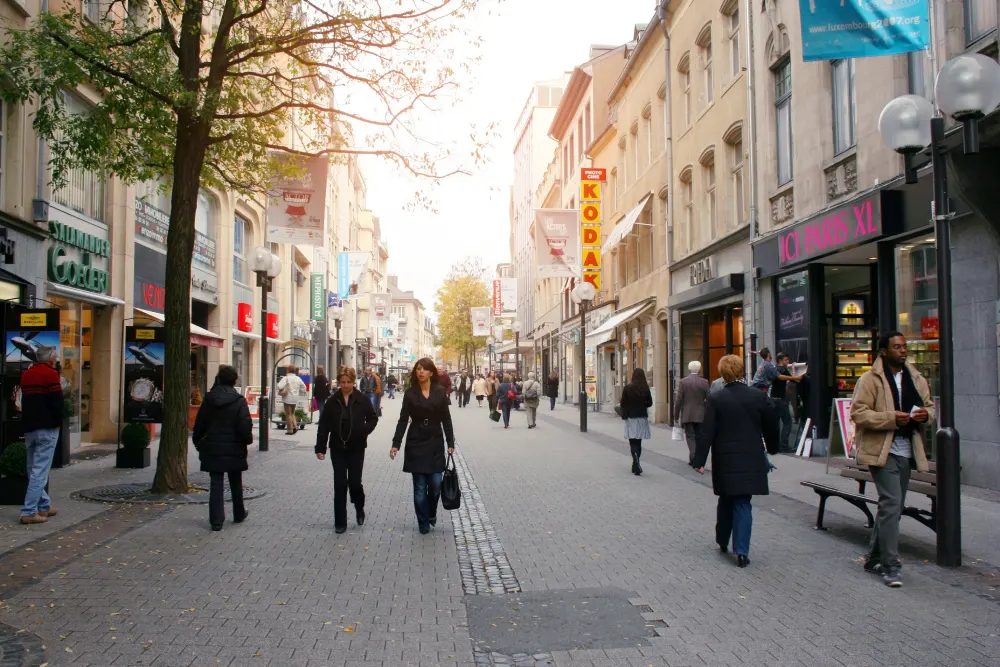
The main foreign communities present in Luxembourg territory are:
- Portuguese, with 92.101 representatives, becoming the most numerous and representing almost 14% of the population of the Grand Duchy.
- French, with 49.104 citizens, the second largest foreign community, comprising more than 7% of the Luxembourg population.
- Italian, with 24.676 people, representing 3,7% of the population.
- Belgian, with more than 19.205 residents.
- German, made up of 12.678 members.
- Spanish, with 9.068 residents.
- Romanian, with 6.625 residents.
- Ukrainian, with 5.238 residents.
- Polish, with 5.130 residents.
- Indiana, made up of 4.657 residents.
- Chinese, with 4.295 residents.
- Greek, with 4.268 inhabitants.
- Dutch, with 3.956 inhabitants.
- British, with 3.924 inhabitants (a 31% decrease after Brexit, compared to 5.766 in 2020).
In this cultural and demographic mosaic, Luxembourg continues to be a beacon of opportunities for those seeking a new life in Europe, particularly for those of Italian descent and Portuguese speakers.
The project "Moving Lusitalia” not only celebrates the history of two great diasporas, but also sheds light on the present and future of a country that prides itself on its diversity and warm welcome.
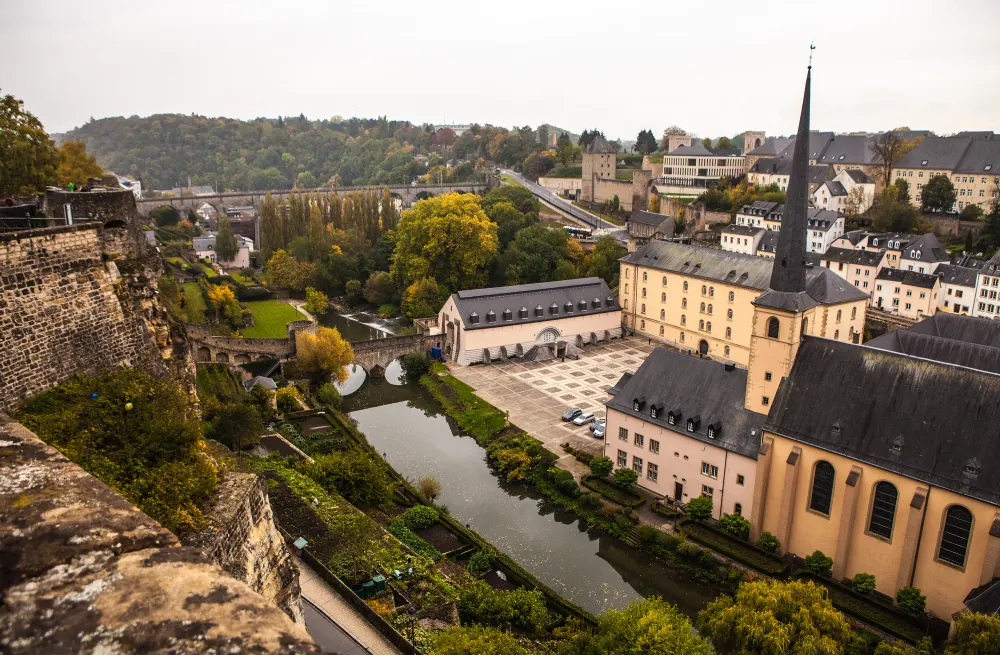
The main characteristics of the population and society of Luxembourg
1. Rapid demographic growth:
- Luxembourg is one of the smallest and least populated countries in Europe, but its population is growing rapidly every year.
- As of January 1, 2023, Luxembourg has a population of 660.809, an increase of 2,4% in one year.
- In the last 60 years, the population has more than doubled, rising from 314.900 inhabitants in 1961.
2. High percentage of foreigners:
- Around 47,4% of Luxembourg's population is made up of foreigners, highlighting the country's multicultural nature.
- In 1961, the percentage of foreigners was just 13,2%, highlighting the significant demographic change.
3. Attracting young and male people:
- Luxembourg attracts a young, predominantly male population, with the average age of foreigners being 39 compared to 40,4 for women.
- The quality of life, safety and efficient healthcare system are factors that attract young people and professionals in search of opportunities.
4. Multiple official languages:
- Luxembourg has three official languages: Luxembourgish, German and French.
- Luxembourgish is the national language and is mandatory for obtaining citizenship by naturalization.
- French is widely spoken, and English and German are also common due to the diverse population.
5. Multicultural society:
- More than 170 different nationalities live in Luxembourg, mainly of European origin.
- The Portuguese community is the largest, representing around 14% of the total population.
- Other significant communities include French, Italian, Belgian, German, Spanish, Romanian, Ukrainian, Polish, Indian, Chinese and Greek.
6. Predominance of Christianity:
- The majority of the Luxembourg population is Christian, with more than 90% being Catholic.
- Around 25% of the population does not follow any religion, while Islam is growing, with around 2% of the population being Muslim.
7. Active economy and European influence:
- The Luxembourg job market is dynamic and attracts many frontier workers from neighboring regions, such as France, Belgium and Germany.
- Luxembourg is home to many European institutions, including the European Comission, attracting European employees from all parts of the continent.
- Large multinationals, such as Amazon e Ferrero, have established themselves in Luxembourg, offering career opportunities and high incomes.
8. Fluctuations in migration flows:
- Migration flows to Luxembourg vary over the years, with different nationalities predominating at different periods.
- The country has recently witnessed an increased arrival of Ukrainians and Italians, while the French are leaving the country in greater numbers due to high property prices.
- Accommodation difficulties and cost of living influence the migration balance.
Luxembourg, with its diverse population and thriving economy, continues to be an attractive destination for people from all over the world in search of professional opportunities and a high quality of life.
Photos: DespositPhotos
FOLLOW ITALIANISM