


































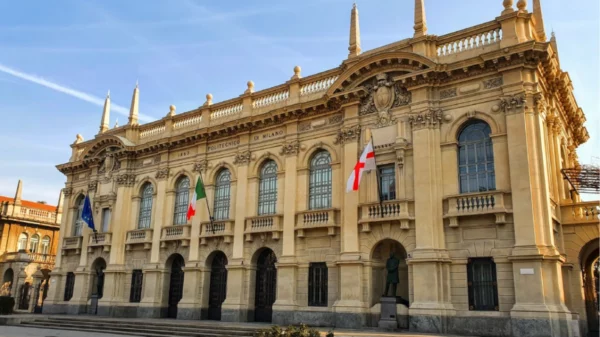

The ruling on the Great Naturalization, resulting from a hearing in 'Supreme Court of Cassation' from Italy, held this Tuesday (12) in Rome, may be released by September.
According to lawyer Antonio Cattaneo, who was hired by an Italian-Brazilian family and attended the hearing, it will be a quick decision.


He participated in a live debate held by the Italianismo portal on its Facebook page (facebook.com/italianismo) shortly after the hearing at the Palace of Justice this Tuesday.
Political argumentation
“One detail that perplexed me is that at the end of the discussion, the Italian state lawyer made a suggestion saying that Italy is the last European country to recognize Italian citizenship without generational limits, citing France, Spain, Portugal, and the Netherlands, which limit citizenship to children or grandchildren,” commented Cattaneo during the Italianism debate.
The lawyer revealed that the “Avvocatura Generale dello Stato”, an Italian body equivalent to the Attorney General of the Union of Brazil, responsible for defending the Great Naturalization thesis, adopted a sociopolitical discourse in its arguments, instead of paying attention to the technical aspects of the subject at hand.
Very big risk
Also participating in the debate were deputy Luis Roberto Lorenzato, senator Fabio Porta, lawyer Daniela Mariani and journalist Reginaldo Maia, director of Italianismo, who mediated the meeting.
for the lawyer Daniela MarianiAlthough initiatives that limit Italian citizenship always resurface from time to time, there has never been such a real possibility of a change in the law as there is now.

She said she sees this situation as a “very big risk”, especially because there are parliamentarians in Europe to represent descendants of Italians, but who, according to her, “work hard to limit descendants”.
“Sometimes, by not paying attention to these factors, a law like this ends up passing and affecting the rights of all of us, who can contribute to Italy. We are not a hindrance, we are a benefit to Italy”, she assessed.
Inclusion
For senator Fabio Porta, defender of the thesis of Jus Scholae, Italy would benefit enormously if it opened its doors both to Italian descendants and to the 100 to 200 thousand young people who are already in Italy and need greater inclusion.

“Italy is the oldest country in the world and has to include and not close spaces. There are two ways to include. One is to integrate those who are already in Italy and already have all the rights, despite their citizenship not being formalized, and the other is to help the inclusion of Italian descendants”, commented Porta.
Limit
Deputy Luis Roberto Lorenzato pointed out that the right to Italian citizenship through descent is not unlimited, as those who insist on placing legal barriers in citizenship laws claim. According to him, the limit is reached when the children of Italians decide not to have children. However, descendants, as soon as they are born, acquire the right to obtain Italian citizenship.
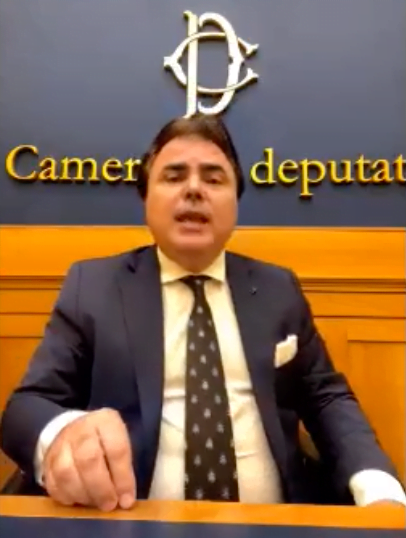
“This fallacy of trying to diminish and say that Italians who were not born in Italy have lost their connection is racist and absurd. The person is Italian because they had a living descendant when Italy was unified,” she concluded.
Italianism
The debate on the Italianismo Facebook page lasted more than an hour, and included hundreds of comments from the thousands of users who followed the event live.
Italianismo will continue to discuss the subject in the coming days, interviewing experts on the subject and bringing the reader all the updated information on this topic of great interest, which can directly reach around 6 million Italian-Brazilians.
Watch the full debate:
FOLLOW ITALIANISM