

































Um Brazilian study pointed out that Michelangelo Buonarroti (1475-1564) may have suffered from the Horton's disease, a pathology also known as giant cell arteritis, and that this may have caused the blindness and depression reported at the end of the Italian genius' life.
The results were published in the Italian scientific journal “Neurological Sciences” and all the research was led by the professor at Federal University of Health Sciences of Porto Alegre, Deivis de Campos.

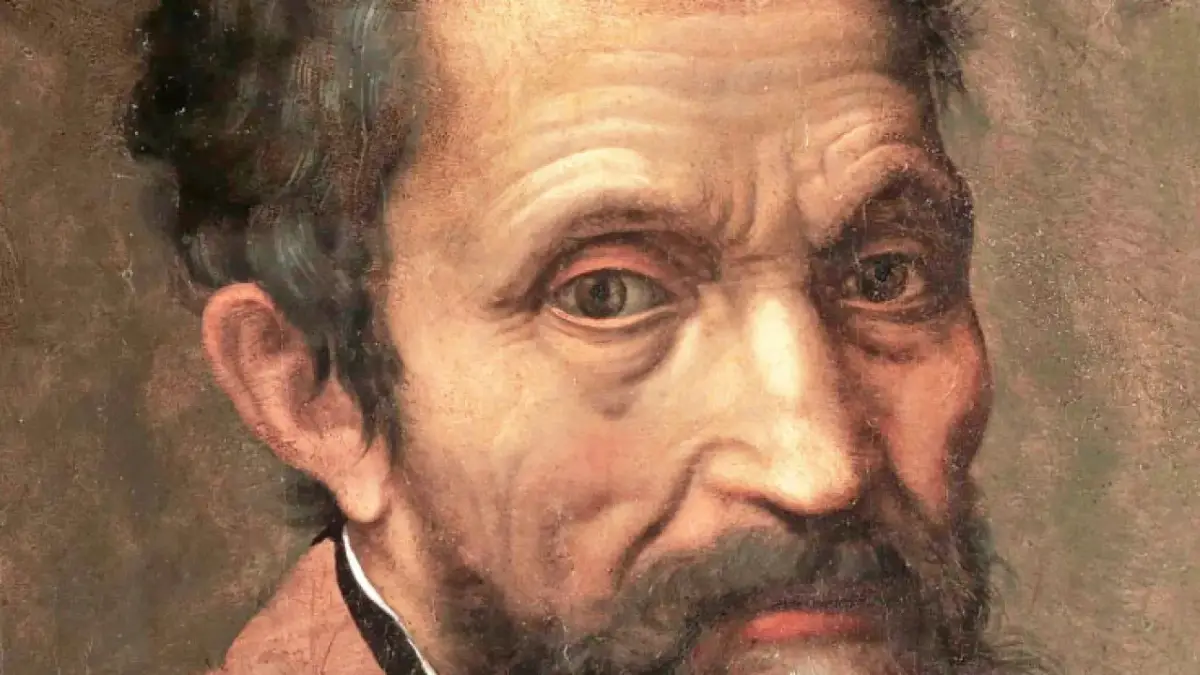
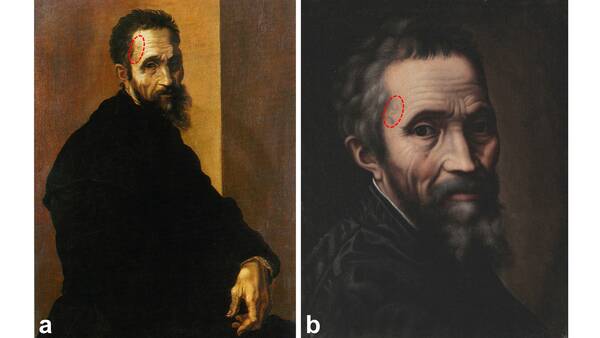
As the expert explained to ANSA, the problem was identified based on two portraits and a bronze sculpture, the latter from the Galleria dell'Accademia and the Florence Uffizi Gallery, and which portrayed the artist over 60 years old.
“In these works it is evident, in the temples of Michelangelo, the dilation of an artery (superficial temporal artery) that is compatible with the pattern found in patients with Horton's disease. And it was from this detail in the portraits and bronze sculpture, until then unexplored in literature, that my investigation began”, reported the professor, who is also a researcher of the Italian's works.
According to Campos, Horton's disease is more common in people over 50 years of age and who are from Northern Europe or have Scandinavian ancestry. And, those with the problem have superficial temporal arteries with “inflamed or damaged” lining.
“In addition, specialized studies indicate that in many cases this disease can cause blindness, depression and fever, with blindness being one of the most serious complications. In this context, specialized literature describes that Michelangelo in fact also suffered from blindness, depression and fever, especially in old age. Therefore, there is strong evidence that the artist could actually be a carrier of this disease”, he adds to ANSA.
Deivis still believes that Horton's illness may have influenced the artist's works because, in the known literature, there is an indication that “especially in the last 10 years of his life”, Michelangelo “had his vision seriously impaired and that is why many works were left behind. unfinished.”
“This can be proven through the “Pietà de Bandini”, made by Michelangelo between 1550 and 1555, in which the artist portrays himself in the face of Nicodemus with his eyelids drooping in allusion to his visual weakness. Furthermore, the literature describes that during the elaboration of Bandini's Pietà, Michelangelo realized that it had many inaccuracies, probably caused by the artist's own physical weaknesses, especially in the eyes”, points out the professor. (HANDLE).
FOLLOW ITALIANISM