































From the prevention of gender-based violence and femicides to prison policies, but also to trade and political-legislative exchange, Italy can offer valid examples of good policies for a troubled country like Brazil. The two countries can join hands.
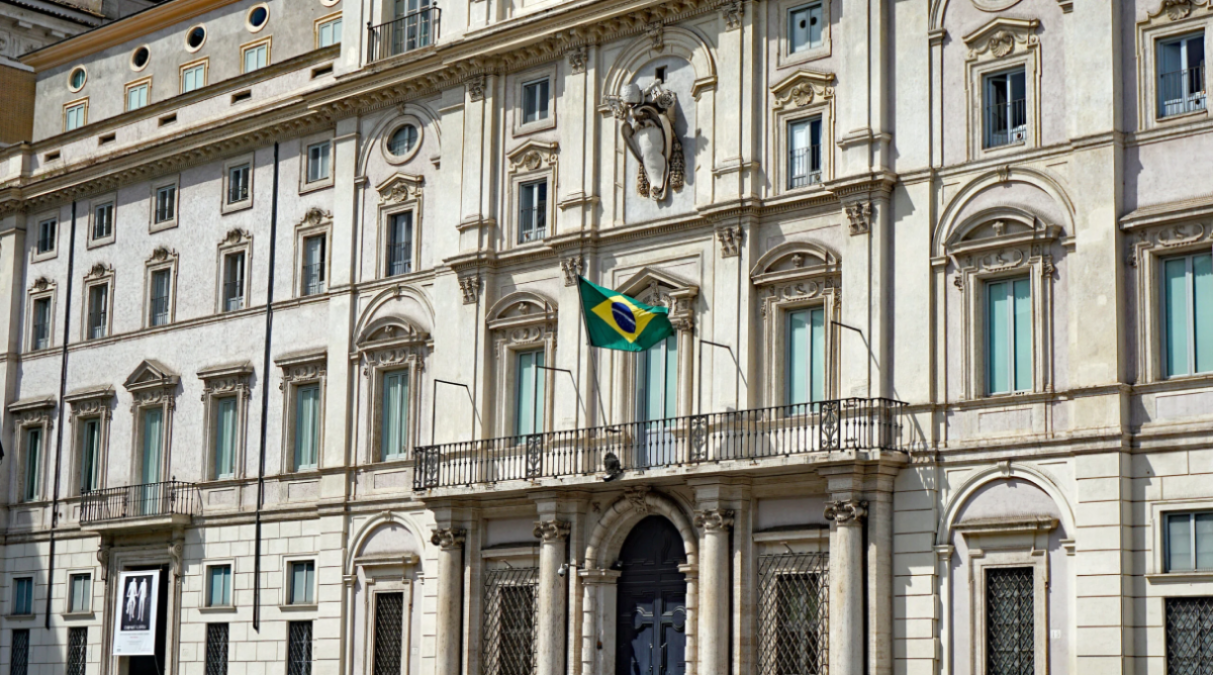
In this spirit, the Brazilian Embassy in Rome hosted this Wednesday (3) the 1st Italian-Brazilian Seminar on Public Policies, opened by the Brazilian diplomat in Italy, Renato Mosca.
“It is a proposal from [Brazilian] deputies Eros Biondini and [Italian] Fabio Porta, who are the presidents of the respective friendship groups of the two Parliaments. For us it is very important because, when I arrived, I decided to start a new approach: opening the embassy to the people, to Brazilians and Italians, because this is the new approach of the Lula government. And especially on the issue of women, because violence against women is a constant concern among us in Brazil”, he explained.
For this reason, the first of three “panels” that followed each other in the Renaissance hall of the Auditorium of Palazzo Pamphilj, in Piazza Navona, focused on the example of the “Pink Code” adopted in Italy, which allows a dedicated path in health units for women, but also for children and vulnerable people, victims of violence. And also in the “Red Code”, the law in force since 2019 that “strengthens the protection of all those who suffer violence, persecution and mistreatment”.

The Supreme Court reaffirmed: citizenship is born with the person.
- New legal front opened
- Processes can still be filed.
- Individual assessment before any decision.
“These are important experiences for us in Brazil”, commented Mosca.
In particular, Vittoria Duretti and Antonio D'Urso, health authorities from Tuscany, a region where the procedure was successfully tested from 2010 to 2014, spoke about the Pink Code before it became national law in 2016.
Among those who spoke was also deputy Debora Serracchiani: “The important thing is that gender-based violence is also prevented in Brazil, because this is partly what is already happening in Italy. I believe that this possibility of comparing ourselves serves to take the best practices of one country and try to export them to the other, and vice versa”, said the parliamentarian from the Democratic Party (PD) to ANSA.
A second panel involved a discussion on policy alternatives to prison, while a third addressed commercial and legislative partnerships between the two countries.
“Since his arrival a few months ago, Ambassador Mosca has transformed this splendid location into a place for meeting and discussion, for art and music, and also for political and institutional interactions between Italy and Brazil,” especially on the 150th anniversary of the first Italian migration to Brazilian soil, in the year that Rome presides over the G7 and Brasília the G20,” highlighted Porta, president of the Italy-Brazil friendship group of the Italian Inter-Parliamentary Union, organizer of the event, together with Brazilian deputy Biondini, who leads the Italian-Brazilian Friendship Group of the Brazilian Parliament.
Biondini recalled the importance of increasingly close cooperation between Brazil, where 30 million descendants of Italians live, the largest Italian community in the world outside of Italy, and Italy, which is home to 52 thousand Brazilian citizens.
Among the many experiences shared between the two friendly countries, Biondini cited the “Fattoria della Speranza” (Hope Farm), which today also operates in Italy, dedicated to the recovery of drug addicts, and Apac, for the recovery and reintegration of former -prisoners in social life. (HANDLE)