

































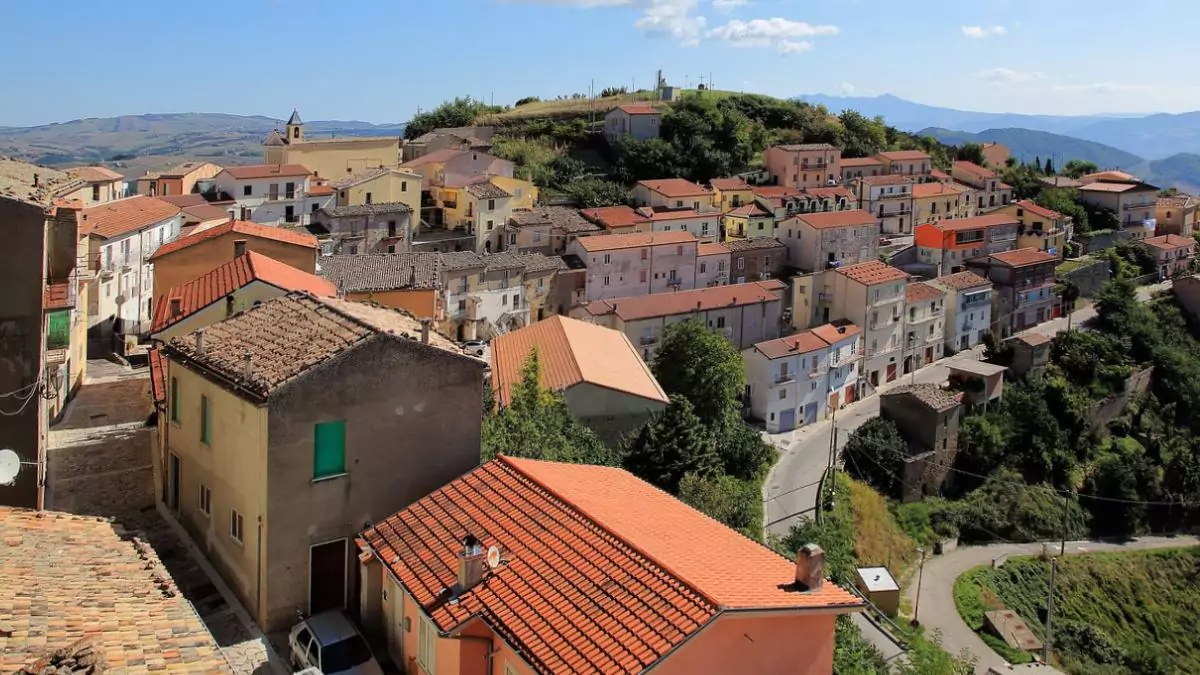
Italy has discovered that its descendants abroad are worth money. A lot of money.
The government itself estimates that almost 80 million The number of Italians, people of Italian descent, and those of Italian origin scattered around the world is greater than the entire resident population of Italy, which today stands at around 59 million.
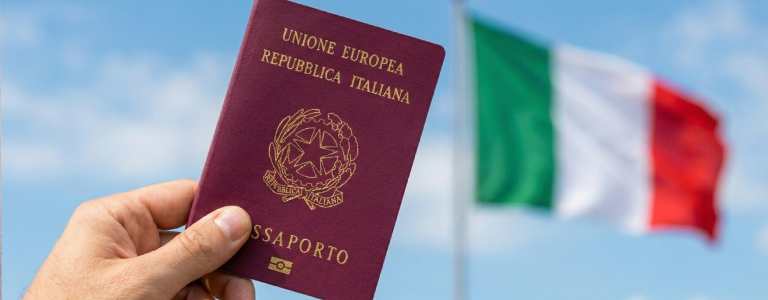
To bring them back to the cities from which their parents, grandparents, and great-grandparents had departed, Rome transformed what was called "Roots tourism"in state policy."
And he put money into it.
The first major program received €20 million from the PNRR, the Italian plan funded with European resources from NextGenerationEU. The project “Roots Tourism” It was created specifically to develop products, services, and campaigns aimed at descendants of Italians abroad.
Now, the strategy has reached another scale.
In 2026, Farnesina received €200 million from the Development and Cohesion Fund (FSC) for a new phase of investments that the Ministry of Foreign Affairs itself presents as an expansion of the policy of promoting tourism rooted in local traditions.
Combined, the two initiatives involve €220 million in public funds associated with the strategy. Approximately R$ 1,3 billion.
There is an important caveat: this does not mean that €220 million has already been spent directly on advertising for people of Italian descent. The €20 million corresponds to... original PNRR programThe remaining €200 million will fund a broader phase, including the restoration of villages, tourist routes, infrastructure, natural areas, and facilities in the south-central region of the country.
But the political objective presented by the Farnesina itself remains the same: to transform the descendants' connection with Italy into economic development.
80 million potential customers
The size of this market explains the interest.
Farnesina estimates that there are There are nearly 80 million Italians and people of Italian descent in the world. potentially interested in rediscovering their family's places of origin.
Since at least 2018, the Italian government has openly stated its intention to transform this sense of belonging into travel, consumption of local products, preservation of buildings, and development of small towns.
It's not just nostalgia. It's an economic strategy.
6,6 million tourists and €5 billion
The numbers show why. According to data released by the Farnesina itself, 6,6 million tourists from their roots traveled to Italy in 2024.
They injected approximately €5 billion into the Italian economy in just one year. This amount represented a 34,4% increase compared to the previous year.
By 2026, the government estimates more than 7,4 million tourists visiting their roots, with spending exceeding... €5,5 billion.
In other words, Italy invested €20 million in the original program to work on a market that currently moves billions a year.
More than 800 municipalities involved.
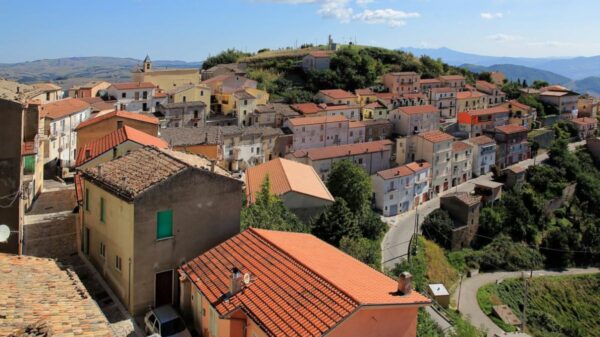
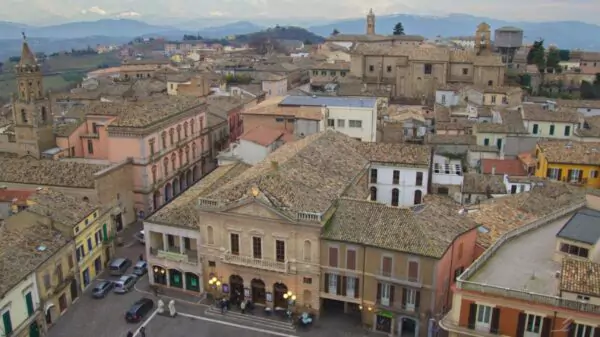
The strategy also reached small towns. More than 800 Italian municipalities They were selected to receive funding and develop initiatives aimed at Italians and their descendants living abroad.
These cities have already organized around 750 events, which, according to Farnesina, reached an estimated audience of over 1 million people.
Another aspect of the PNRR allocated €4 million solely to the so-called... “Bando delle Idee”, created to stimulate projects, new services and professionals specialized in roots tourism.
The platform was also created. Italea, a national network designed to connect descendants to their regions and municipalities of origin.
Italea Card already has over 760 partners, including local businesses, transportation companies, hotels, and large national groups.
The logic is simple: get the descendant to Italy and spend money.
And now comes another €200 million.
The first phase cost €20 million. In 2026, the government decided to expand the investment.
The Farnesina received a grant of €200 million from the Development and Cohesion Fund 2021-2027 for interventions related to the tourist development of villages, paths, nature reserves and infrastructure in south-central Italy.
Among the initial projects are €70 million for the province of Avellino, €20 million for Fiumicino, and other investments totaling tens of millions of euros in Lazio and Rome.
In presenting the new phase, the Farnesina itself once again associated it with the 80 million Italians and people of Italian descent living abroad.
Italy, therefore, is not giving up on its descendants. On the contrary, it is investing even more money to attract them.
Inconsistency appears in citizenship.
This is precisely where numbers meet politics. While investing public resources to convince descendants to rebuild ties with their families' places of origin, Italy has restricted the recognition of citizenship by descent (jure sanguinis) in 2025.
Law 74/2025 now prevents recognition in several situations that previously allowed the transmission of citizenship between generations born abroad.
The same state that considers a universe of 80 million people as a strategic public for its economy has begun to argue that part of this family bond would not be sufficient for the recognition of citizenship.
The issue has now also reached the European courts.
On July 23, 2026, the Italian Constitutional Court decided to refer questions related to Article 3-bis of Law 91/1992, introduced by the 2025 reform, to the Court of Justice of the European Union.
Descendant to spend, distant to be a citizen.
The numbers make the contradiction more evident than any speech.
- 80 million Italians and their descendants are considered a strategic market.
- €20 million They were included in the original program.
- More than 800 municipalities They were mobilized.
- 6,6 million Tourists from the roots arrived in 2024.
- €5 billion They remained in the Italian economy.
- 7,4 million They are expected in 2026.
- More than €5,5 billion They can spend that much this year.
And now there are An additional €200 million intended for the new phase of investments presented by Farnesina within the strategy of roots tourism.
From an economic standpoint, Italy seems to have no doubt about the existence of the link between these descendants and the country.
The doubt arises when this connection ceases to be purely touristic and begins to produce a passport.