




















Two Italian professors traveled through communities of descendants in Rio Grande do Sul and found traces of Venetian immigration still preserved among third, fourth, and even fifth-generation families.
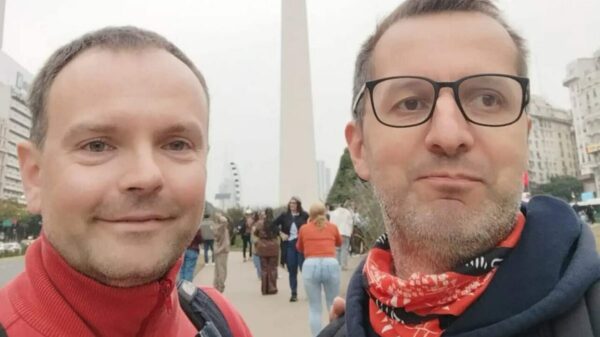
Alberto Zago and Emanuele Danese, high school teachers from Verona, traveled through Argentina, Uruguay, and Brazil with the goal of documenting what remains. of the great emigration from Veneto to South America, which began on a large scale at the end of the 19th century.
“We found descendants, associations, scholars and communities that still preserve the language, memory, traditions and a surprising connection with Veneto,” Zago told the ANSA news agency.

From Belluno, Vicenza, Padua and Verona to Brazil
The journey began in Buenos Aires, continued through Uruguay, and ended in Brazil by land. In Rio Grande do Sul, the two professors rented a car and traveled throughout the state in search of communities connected to Italian immigration.

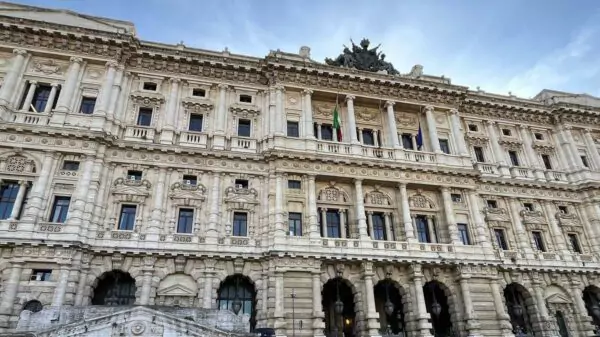
The Supreme Court reaffirmed: citizenship is born with the person.
- New legal front opened
- Processes can still be filed.
- Individual assessment before any decision.
According to the professors, among the descendants found, ancestors originating from the provinces of Belluno, Vicenza, Padua, and Verona repeatedly appear.
Venetian roots have been identified not only in surnames and family trees, but also in gastronomy, the cultivation of vegetable gardens and vineyards, festivals, music, religiosity and, above all, in the language.
One of the meetings took place with Marcos Daniel Zancan, professor at the Industrial Technical College of the Federal University of Santa Maria (UFSM) and coordinator of the Talian Project, an initiative dedicated to preserving the historical, linguistic, and cultural heritage of Italian immigration in the Quarta Colônia region.
Talian has become part of Brazilian cultural heritage.
The Italian It is one of the most visible legacies of this immigration. The language developed in Brazil from the contact between linguistic varieties brought mainly by immigrants from northern Italy, with a strong Venetian presence, and Portuguese.
In 2014, the Italian language officially received the Brazilian Cultural Reference Title after its inclusion in the National Inventory of Linguistic Diversity.
Today, 30 municipalities in Rio Grande do Sul and four in Santa Catarina recognize Talian as a co-official language, according to Iphan. At the same time, recent surveys point to difficulties in transmitting the language to new generations.
During his visit to Caxias do Sul, Zago even participated in a radio broadcast in Talian, in the presence of Bishop Emeritus Alessandro Ruffinoni.
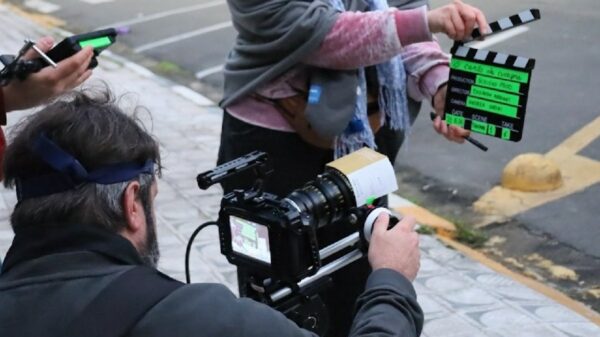
The material gathered during the expedition, including records, interviews, and documentation about the communities visited, will be used by teachers in educational activities in Italy.