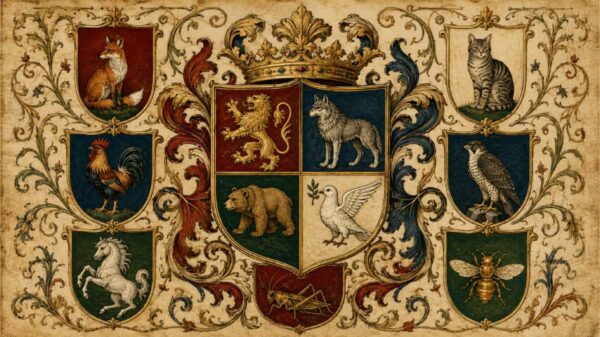


































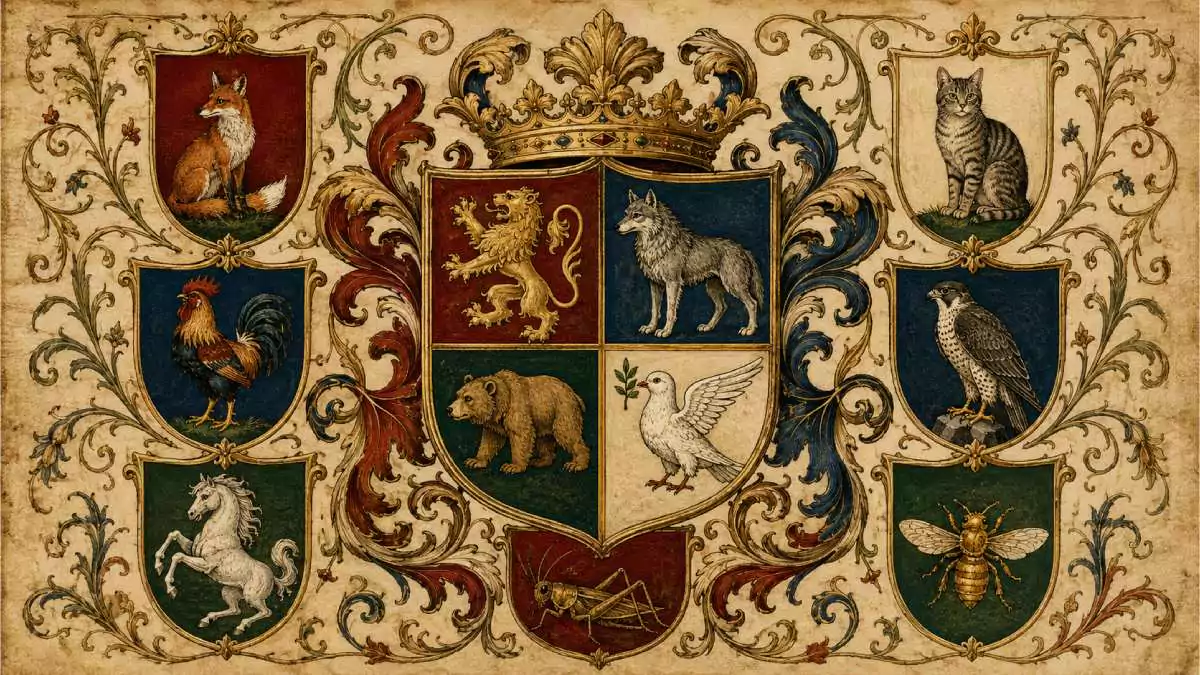
There's a small zoo hidden in Italian surnames. Leone, Lupi, Volpe, Gatti, Colombo, Cavallo, Gallo, Orsi. The presence of animals in family names is so common that it spans practically all of Italy.
The explanation seems simple: someone earned a nickname because they resembled a certain animal, and the name ended up... passed on to descendants. This has happened many times, but it doesn't explain all cases.
In onomastics, the field that studies the origin and formation of proper names, animals appear in surnames through different paths. They may have given rise to nicknames, but also to old personal names, professional references, dialectal forms, and even surnames given to abandoned children.
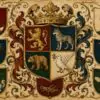
Lion, wolf, and bear became family names.
Leone is one of the most striking examples. The surname ranked 25th among the most frequent in Italy, with 44.281 bearers according to Istat data from 2016.
The Supreme Court reaffirmed: citizenship is born with the person.
- New legal front opened
- Processes can still be filed.
- Individual assessment before any decision.
But it would be premature to conclude that all the early Leones were strong or courageous men.
Leone already existed as a personal name and could also function as a nickname directly related to the animal. The same duality occurs with Orsi and Lupi. Wolf, bear, and lion, incidentally, have a centuries-old tradition as personal names in different parts of Europe.
It is precisely this detail that makes those quick genealogical explanations like "your ancestor received this surname because he was as brave as a lion" risky.
It may have happened. But not necessarily.
Columbus hides a very different story.
One of the most curious cases is in Lombardy. The most frequent surname in the region is ColumboThe name means "pigeon" or "dove," literally meaning "pigeon" or "dove." Throughout Italy, it ranks 9th among the most common surnames.
However, many Lombard Colombos did not receive the name because an ancestor had some characteristic attributed to the bird. The origin is linked to abandoned children.
Colombo and Colombini were given in large numbers to children sheltered by the Santa Caterina della Ruota Institute in Milan. The institution had a dove as its symbol.
Thus, thousands of families today may carry in their surnames the memory of an old system for fostering children.
This is a good example of why looking only at the literal meaning of a surname can lead to wrong conclusions.
Gallo can mean a rooster, but it can also mean something else.
Another case shows how the same surname can have more than one origin.
Cock It is the 11th most frequent surname in Italy. Galli appears in 47th position.
The name may indeed derive from the rooster. But Gallo could also refer to the ancient Gauls and, later, to the French.
In other words, two families named Gallo may have arrived at the same surname through completely different paths.
The Constitutional Court's decision changed the landscape. The new citizenship law will now be reviewed by the European Union's courts of justice.
This phenomenon is known in onomastics as polyetymology, when the same form has more than one possible origin.
From pigeon to bee
The range of Italian surnames encompasses far beyond the most well-known animals.
In Campania, names such as appear Palumbo, related to the pigeon; Tortora, to the dove; Merolato the blackbird; and Apicellaliterally "little bee". Among the animal names most common in the region are also Cavallo, Gallo, Volpe, Lepore and Lupo.
In other parts of Italy, surnames such as Mosca, Capra, Quaglia, Falco, Gallina, Grillo, Cane, Gatto, and other references to the animal kingdom appear. In Piedmont and Liguria, for example, surnames such as Gallo, Merlo, Cavallo, Quaglia, Capra, Mosca, Leone, Falco, Volpe, Gatto, and Lupo are recorded.
There are even compound surnames involving animals. A Italian Rivista di Onomastica It records forms created from verbs and words such as cats, dogs, oxen, crickets, hares, and lions, many of them originating from old nicknames and popular expressions.
The animal is a clue, not the answer.
It's tempting to imagine that a Volpe descended from someone cunning, a Leone from someone courageous, and a Lupo from a fierce man.
Sometimes, the nickname may indeed have arisen from such a comparison. But the history of Italian surnames shows that the explanation is rarely so straightforward.
An animal's name can conceal an old given name, a nickname, a dialect word, a profession, or even the story of a child left in an institution centuries ago.
For those researching their own genealogy, therefore, having an animal in their surname is an excellent starting point. It should just not be treated as proof of the family's origin.
The small bestiary of Italian surnames
Leone (lion), Lupi (wolves), Orsi (bears): They can derive from both old personal names and nicknames related to animals.
Columbus (pigeon or dove): Besides his first and last name, it was attributed to many abandoned children in Milan. because of the symbol of the Santa Caterina della Ruota Institute.
Rooster (gallo): It may originate from the animal or be a reference to the Gauls and French.
Palumbo (pigeon): A regionally derived form linked to the bird's name.
Merola (blackbird): surname related to the name of this bird.
Tortora (drum): This corresponds to the Italian name for the bird.
Apicella (little bee or small bee): it derivates from bee (bee), in diminutive form.
Volpe (fox), Cavallo (horse), Gatto (cat), Mosca (fly), Capra (goat), Falco (falcon), and Grillo (cricket): These are among the many animal names incorporated into the repertoire of Italian surnames.