

































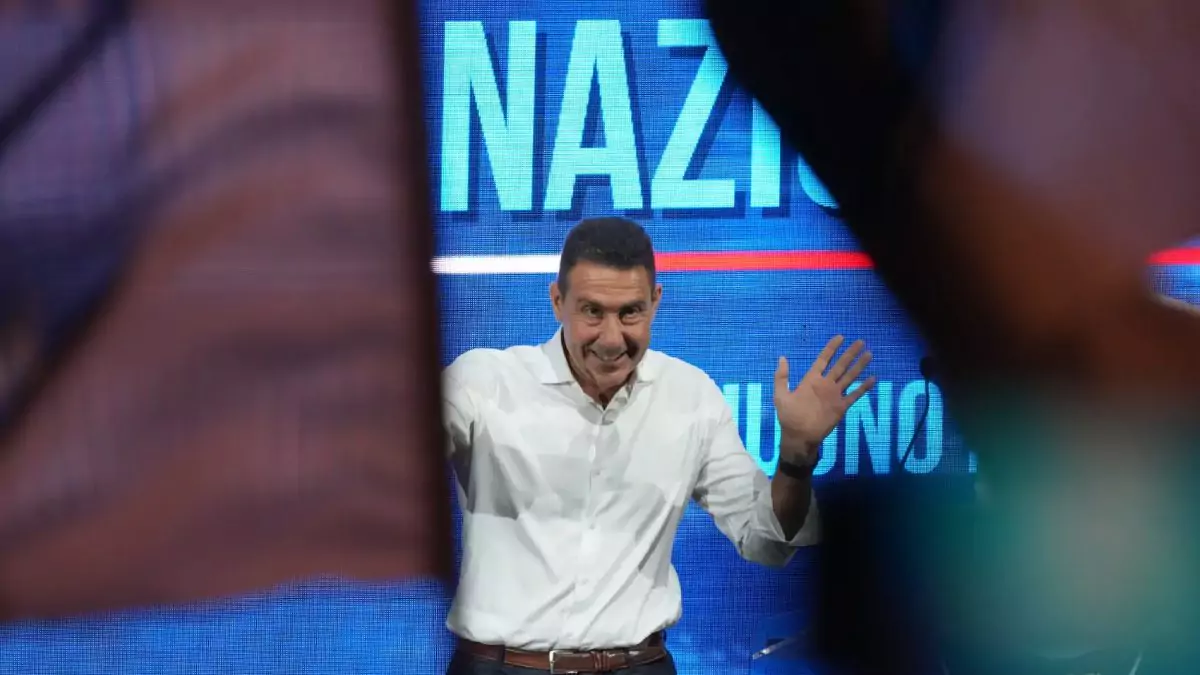
Roberto Vannacci placed immigration at the center of the program. National Future for Italy. The party presented this Tuesday (11) a set of 22 measures for a so-called "Remigration Plan", with proposals to reduce the presence of foreigners in the country and tighten the rules for accessing Italian citizenship.
Among the ideas are increasing the required residency period for the naturalization of non-EU citizens from 10 to 20 years, limiting family reunifications, restricting social benefits, and expanding deportations.
These measures are part of a political program and are not yet in effect. To become law, they would require parliamentary approval and, in some cases, [further action would be required]. They could face constitutional and European Union legal limitations..
Vannacci's main proposals for immigration and citizenship.
1. Require 20 years of residency for citizenship.

The Supreme Court reaffirmed: citizenship is born with the person.
- New legal front opened
- Processes can still be filed.
- Individual assessment before any decision.
The Futuro Nazionale party proposes doubling the currently required period of legal residency for citizens of non-EU countries. Currently, ten years of legal residency are required to apply for Italian citizenship.
2. Require Italian at C1 level.
The applicant for citizenship would have to demonstrate advanced proficiency in the Italian language. Currently, legislation requires, in certain naturalization procedures, knowledge equivalent to level B1.
3. Create an assimilation statement.
The program stipulates that the foreigner must declare adherence to the values defined by the party as belonging to "Greek, Roman, and Christian civilization."
4. Reject ius soli
The Futuro Nazionale party opposes the automatic granting of citizenship based solely on birth in Italian territory.
5. Reject the ius scholae
The party is also opposed to proposals that would facilitate citizenship for children of foreigners who studied for a certain period in the Italian education system.
6. Reduce the presence of foreigners in Italy.
Vannacci has already stated that he intends to reduce it to approximately % Of the population 4 the proportion of foreigners residing in the country.
7. Create a "remigration" program.
The concept advocated by the party involves not only the expulsion of undocumented immigrants, but also policies aimed at encouraging the return of legal immigrants to their countries of origin.

The Constitutional Court's decision changed the landscape. The new citizenship law will now be reviewed by the European Union's courts of justice.
8. Adopt what is called "rotational immigration"
Foreign workers could stay in Italy for specified periods and then return to their countries.
9. Review the current decrees regarding the entry of workers.
The program aims to replace or restrict the system of so-called flow decrees, used by the Italian government to establish annual quotas for foreign workers.
10. Limit family reunification
The rules allowing resident foreigners to bring family members to Italy would be tightened.
11. Link worker entry to return.
The admission of foreigners could depend on the existence of agreements with the countries of origin that guarantee the worker's return in certain situations.
12. Consider “cultural compatibility”
Futuro Nazionale intends to introduce cultural criteria in the selection of foreigners authorized to enter the country to work.
13. Restrict social benefits
Foreigners without Italian citizenship could lose access to certain extraordinary social benefits.
14. Restricting access to public housing
The program provides priority or exclusivity for Italian citizens in certain social housing schemes.
15. Review bonuses intended for foreigners.
Some public incentives and subsidies could become dependent on Italian citizenship.
16. Maintain essential medical care.
Even within the restrictions plan, the party affirms that treatments considered essential would continue to be guaranteed.
17. Encourage companies to hire Italians.
Companies could receive tax benefits for replacing non-EU workers with Italian workers.
18. Use immigration savings to reduce labor taxes.
According to the proposal, resources saved through policies aimed at reducing immigration would be allocated to lowering payroll taxes.
19. Tighten rules for those receiving unemployment benefits.
Beneficiaries would have to demonstrate greater willingness to accept job offers deemed compatible with their age, health, and location.
20. Expand the expulsion of convicted foreigners.
The program proposes to broaden the use of measures requiring individuals to leave Italian territory following criminal convictions.
21. Facilitate the expulsion of citizens from other EU countries.
Vannacci intends to broaden the interpretation of cases in which European citizens can be removed from Italy for reasons of security or public order. This possibility, however, is limited by European legislation.
22. Expand the grounds for revocation of citizenship.
Futuro Nazionale also aims to increase the circumstances under which citizenship acquired through naturalization could be revoked.
And what about citizenship by descent?
The proposal regarding 20 years of residency does not, at this time, refer to the recognition of Italian citizenship by descent, that is, by blood.
The point raised by Futuro Nazionale concerns citizenship acquired through residency, that is, the naturalization of foreigners living in Italy.
The document presented this Tuesday forms part of the Futuro Nazionale political platform for the period 2027 to 2037. Other parts of the program are yet to be released.