
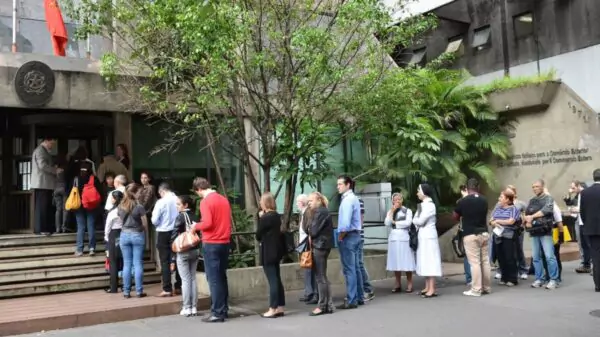















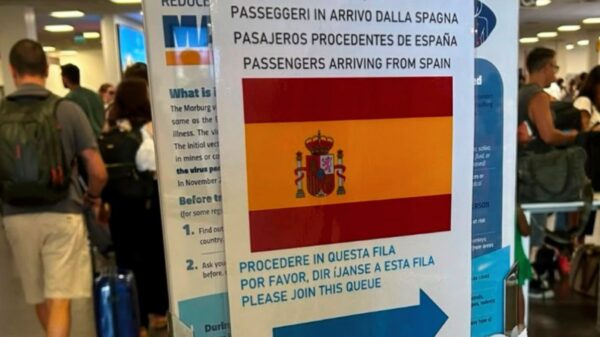





















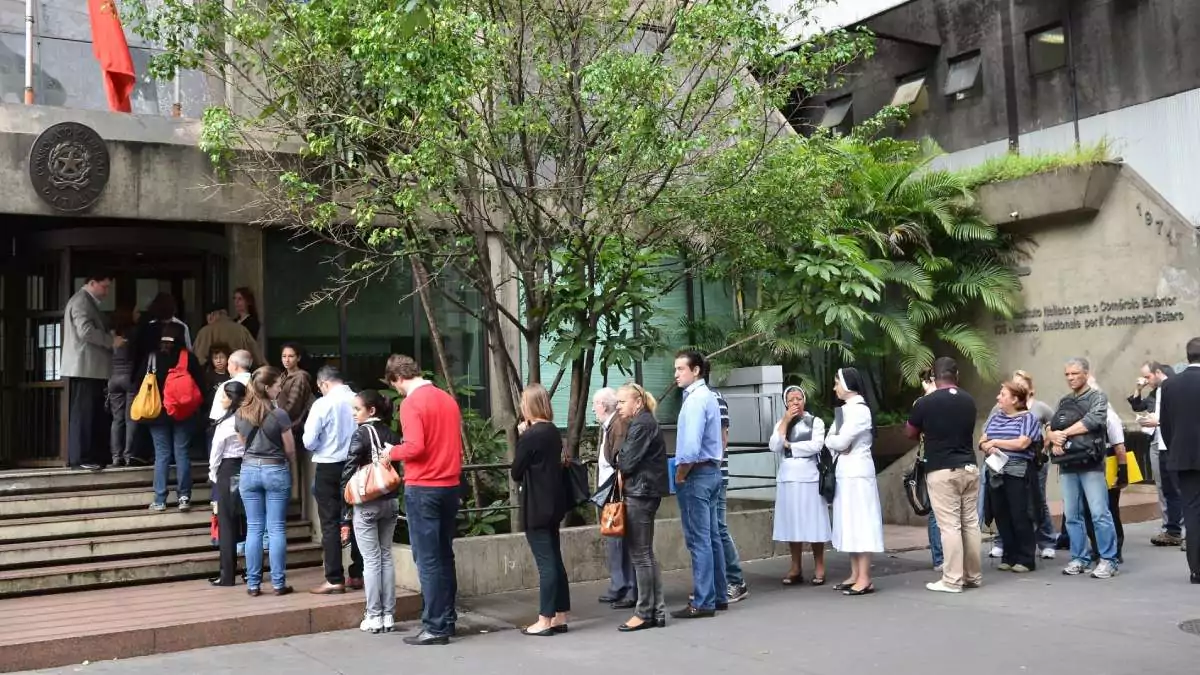
A new dispute is taking shape in Italian courts following the 2025 citizenship reform: what legal weight should be given to those who were already trying to obtain recognition before March 27, 2025, but were unable to formally submit their application due to a lack of available appointments at consulates?
is what the Italianism it is informally referred to as “ius fila”, or “right of way in line”.
The expression does not exist in Italian law. But it summarizes a specific problem created by Tajani DecreeTwo people could have been trying to get service at the same consulate before the reform, but only one found an appointment before 23:59 pm on March 27. The first was expressly protected by the new law. The second became dependent on the interpretation of the judges. And the courts are divided.
Survey of Italianism So far, at least 13 favorable decisions related to this discussion have been identified: seven in Genoa, two in Bologna, and one each in Naples, Florence, Brescia, and Palermo. The situations are not identical, but they share a common element: some documented form of action prior to the Tajani Decree.

The Supreme Court reaffirmed: citizenship is born with the person.
- New legal front opened
- Processes can still be filed.
- Individual assessment before any decision.
The “ius fila”
The reasoning It became particularly clear in Genoa.In recent rulings, Judge Enzo Bucarelli acknowledged that, “from a literal and formal point of view,” the requirements stipulated by the new legislation were not met. Even so, he considered relevant the fact that the applicants had done “everything possible” to obtain assistance before the law changed.
According to the reasoning, treating those who secured a place differently from those who were prevented from doing so by the consular system itself could lead to "illogical discrimination" and "manifest injustice."
This is probably the clearest formulation yet of what we are calling "ius fila": the failed attempt would not only be a future intention, but a concrete action whose outcome depended on the public administration.
Palermo: more than two years of waiting
In Palermo, the argument was even more directly linked to the queue.The applicant had been waiting for an appointment at the consulate for over two years when the reform came into effect. However, the lawsuit was only filed in 2026.
Nevertheless, the court applied the previous rules. In the ruling, the judge considered that the applicant's situation had become "sufficiently consolidated" and was comparable to that of someone who already had an appointment scheduled for March 27, 2025.
The case shows that the debate can go beyond... Prenot@miOld official queues, protocol numbers, and waiting list records can also be part of the discussion.
According to a survey by Italianismo, Approximately 240 people were waiting for treatment. only in the lists of the consulates of São Paulo (135), Curitiba (25) and Porto Alegre (80) when the reform took place, although this number is an estimate based on the queues and appointments available, and not an official figure consolidated by the Italian government.
Bologna speaks of a "clear and unequivocal will"
Another case helps to understand where the border might be. In ruling 4038/2026In a ruling published on May 13, the Bologna Court recognized the citizenship of an American citizen and his daughter even though the application was filed in September 2025.
According to documentation released by the office responsible for the case, the court recognized a “chiara and unequivocal will”, a clear and unequivocal desire to seek recognition before the cut.
There wasn't just a screenshot. Documents presented included contacts with consular offices, PECs (Procedural Executions) prior to March 27th, attempts to access the procedure, and even a power of attorney signed in April 2024. This was the second favorable decision of its kind in Bologna, following ruling 3335/2026 of April 17th.
This helps to form a pattern.
What can prove that the person had already been "activated"?
The favorable decisions analyzed so far do not create an official list of documents. However, the processes reveal elements that can help demonstrate concrete action prior to the court ruling:
- attempts recorded in Prenot@mi, especially when repeated and dated;
- registration on the official consulate list or queue., with number, protocol or confirmation;
- PEC sent to the consulate requesting recognition, assistance, or action;
- emails exchanged with consular offices or municipal about the citizenship process;
- formal requests sent to the consulateincluding by registered mail;
- raccomanda with acknowledgment of receipt, proving the attempt to formally provoke the administration;
- responses from the consulate itself informing of unavailability, waiting list or inability to schedule;
- power of attorney prior to March 27, when combined with other concrete measures;
- documentation capable of reconstructing a sequence of attempts, showing that there was not just a generic intention.
The most important point is the whole package.

The Constitutional Court's decision changed the landscape. The new citizenship law will now be reviewed by the European Union's courts of justice.
The analysis of the Bologna decision itself warns that um print An isolated Prenot@mi email or a single email is not automatically sufficient.What carries weight is conduct that is dated, objective, and directly related to the attempt at identification.
And there are decisions saying exactly the opposite.
The "ius fila" (right to wait in line) is far from being a consolidated thesis. In Brescia, five decisions issued between March and April 2026 rejected applications filed after the cut-off, even though the applicants showed several previous attempts to secure a place in the system. Prenot@mi.
The interpretation was strict: what determined the applicable legislation was the existence of the formal act required by law before the deadline, not the attempts that preceded it.
Interestingly, The Brescia Court itself also has a favorable ruling., which has already become final and unappealable, in another case in which evidence of consular attempts prior to the Tajani Decree was presented.
This is a clear demonstration that division doesn't only occur between different courts. It can exist within the same court.
It's not the "right to print".
This distinction is crucial. What is beginning to emerge in case law cannot be summarized as "whoever has a screenshot of Prenot@mi is safe." They are not.
There are decisions that reject exactly that argument.
What the favorable rulings seem to emphasize is something broader: the demonstration that the applicant had already set in motion, in an objective and verifiable way, the process to exercise their right before the legislative change.
That's where "ius fila" stops being just a joke about the jus sanguinis and goes on to summarize a real legal discussion.
The question the courts will have to answer is simple: can someone who tried to enter before the door closed be treated the same as someone who never tried to enter?
For now, the Italian justice system is responding in both ways.